
Reselling can lead to more than buying and selling individual products. The research, photography, pricing, marketplace and customer-service skills you develop can also support digital products, specialist services, content and your own product range.
This guide compares seven realistic online business ideas for UK resellers. It explains what each model involves, what it may cost to test, the skills it requires and the risks to understand before committing money.
Seven online business ideas compared
The ranges below are planning estimates, not promises. Your actual cost and time to revenue will depend on the product, audience, equipment, selling platform and work you already have.
| Business idea | Indicative test budget | Likely route to first revenue | Main skill | Main risk |
|---|---|---|---|---|
| Used-tech refurbishment | £150–£750+ | Weeks | Testing, repair and accurate grading | Hidden faults, returns and unsafe products |
| Digital products for sellers | £0–£250+ | Weeks to months | Problem-solving, design and marketing | Creating a product before proving demand |
| Specialist product brand | £500–£5,000+ | Months | Product development and supply management | Unsold stock and compliance costs |
| Vintage and collectable reselling | £50–£500+ | Days to weeks | Category knowledge and sourcing | Slow stock and authenticity mistakes |
| Educational reseller content brand | £0–£300+ | Months | Useful content and consistent publishing | Building an audience without a clear offer |
| Ecommerce listing service | £0–£500+ | Days to weeks | Photography, listings and client management | Unclear responsibility and underpricing |
| Guides, workshops or seller community | £0–£500+ | Weeks to months | Proven expertise and teaching | Selling advice before earning trust |
How these ideas differ from ordinary reselling
Traditional reselling usually earns money from the difference between an item’s total cost and its eventual selling price. Several ideas in this guide use the same skills differently:
- Product income: refurbished technology, vintage stock and specialist branded products.
- Service income: photography, listing, marketplace setup and inventory support for clients.
- Digital-product income: templates, workbooks, calculators, guides and courses.
- Audience income: affiliate commissions, sponsorship and products sold through useful content.
- Recurring income: retainers, memberships or repeat customer purchases—only after the underlying offer has been proven.
You do not need to replace your reselling activity. A second model can begin as a small test alongside it. Existing sales can provide the practical experience, examples and audience insight that a new business needs.
1. Refurbish and resell used technology
Used laptops, consoles, phones, tablets and computer components can offer worthwhile resale opportunities when you can identify the exact model, test it properly and control the repair cost. The margin comes from knowledge and risk management—not simply from buying something labelled “untested”.
What the work involves
- Sourcing devices with a repairable fault or cosmetic issue
- Checking serial numbers, activation locks and ownership concerns
- Testing functions, ports, batteries and included accessories
- Cleaning, repairing or upgrading within your competence
- Removing previous-user data securely
- Grading condition accurately and recording test results
- Packaging fragile electronics for delivery
A more realistic profit check
Suppose you find a business laptop for £80. A comparable working unit may sell for around £220, but the difference is not your profit. You might also pay for an SSD, memory, charger, cleaning materials, marketplace fees, promotion, delivery and packaging. A fault discovered after purchase could reduce the selling price or make the repair uneconomic.
Model at least three outcomes before buying:
| Outcome | What happens | Decision |
|---|---|---|
| Best reasonable case | Routine upgrade, full functionality and expected selling price | Shows the opportunity, but should not set the maximum buying price alone |
| Expected case | Normal parts, fees, delivery and a realistic selling period | Use this as the main planning scenario |
| Downside case | Extra fault, return, lower selling price or parts-only sale | Shows whether one bad purchase could remove the profit from several good ones |
Useful SellerStack next steps: check potential eBay costs with the eBay Fee and Profit Calculator, then use the Break-Even Calculator to find the minimum acceptable selling price.
2. Create digital products for online sellers
Resellers repeatedly solve the same practical problems: stock intake, pricing, photography, inventory location, dispatch, record-keeping and profit checks. A well-designed template or guide can turn one reliable process into a product other sellers can use.
Possible digital products
- Inventory and stock-location spreadsheets
- Profit and sourcing worksheets
- Listing photography checklists
- Category-specific condition templates
- Notion or spreadsheet operating dashboards
- Shipping and packaging planners
- Beginner workbooks and short practical guides
Digital products avoid physical storage and postage, but they are not free to operate. You still need research, design, testing, payment processing, delivery, customer support, product updates and marketing. Buyers also need clear information about compatibility, licence terms, refunds and what the download includes.
Validate before building the full product
- Choose one recurring seller problem you understand first-hand.
- Speak to five potential users or study genuine questions from your audience.
- Create the smallest version that delivers one useful result.
- Ask testers to complete a real task without your help.
- Improve unclear instructions before expanding the product.
- Test whether people will pay before creating a large bundle.
A visually attractive planner with no clear outcome is difficult to sell. A plain worksheet that prevents a costly stock mistake may be far more valuable.
Design software such as Canva can help prepare workbooks and downloadable resources, but the usefulness of the underlying process matters more than decoration.
3. Build a small specialist product brand
A specialist product brand takes you beyond reselling someone else’s finished product. You identify a customer problem, develop or adapt a product, control the presentation and take responsibility for what reaches the buyer.
This route can create more control over pricing and repeat purchases, but it also requires more cash and carries greater responsibility than one-off reselling.
A sensible first-product process
- Start with a narrow customer problem. Avoid broad ideas such as “pet accessories” or “home organisation”.
- Research existing products. Read lower-star reviews to understand persistent complaints rather than copying a bestseller.
- Check the numbers. Include samples, minimum order quantities, packaging, import costs, testing, storage, returns and marketplace fees.
- Check compliance. Identify the safety, labelling, traceability and documentation requirements before placing an order.
- Order samples. Test the product and packaging rather than relying on supplier photographs.
- Run a small commercial test. Learn from actual customer use before committing to a large production run.
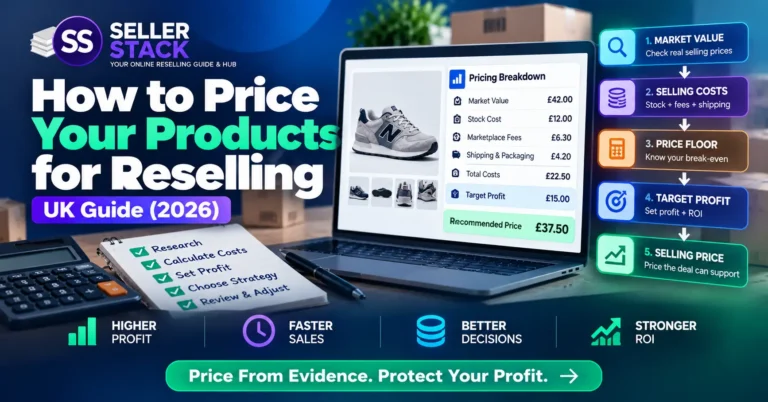
Use the Product Pricing Calculator to test a selling price, and read The Ultimate UK Sourcing Guide before approaching suppliers.
4. Specialise in vintage and collectable reselling
Vintage and collectable reselling remains close to the traditional reseller model, but specialisation can turn general sourcing into a more defensible business. The advantage comes from recognising overlooked products, understanding variants and communicating condition accurately.
Potential specialist categories
Technology and media
Retro consoles, cameras, portable audio, physical media and accessories where model knowledge affects value.
Fashion and textiles
Vintage outerwear, denim, sportswear and subculture pieces where era, sizing and authenticity matter.
Collectables and homeware
Toys, ceramics, advertising items and discontinued products where maker’s marks and completeness matter.
Do not assume rarity equals demand. Some items are scarce because few people wanted them. Check sold evidence, active competition, condition differences and the time similar stock takes to move.
- Learn how to date and identify products in one narrow category.
- Record maker’s marks, model numbers and distinguishing features.
- Photograph labels, wear, repairs and missing parts clearly.
- Research counterfeit risks before buying branded stock.
- Set a maximum purchase price based on an expected—not exceptional—sale.
- Track how long cash remains tied up in each category.
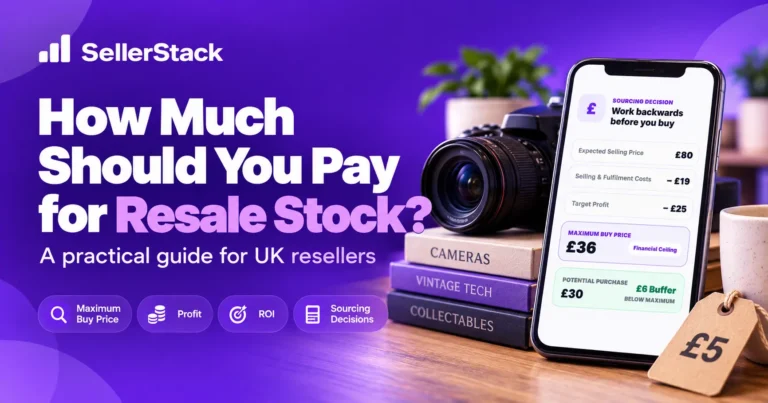
Read How Much Should You Pay for Resale Stock? and use the Reseller Profit Calculator before increasing the amount you invest in specialist inventory.
5. Build an educational reseller content brand
A reseller content brand can publish useful videos, articles, emails or social posts without requiring the creator to appear on camera. What matters is original experience and useful presentation—not whether the account is described as “faceless”.
Content that can build trust
- Realistic sold-item breakdowns with all costs included
- Category identification and condition guides
- Photography, listing and dispatch demonstrations
- Marketplace changes explained in plain English
- Sourcing decisions, including examples you rejected
- Templates or tools that solve a repeatable seller problem
A content brand usually takes time to monetise. Affiliate links, sponsorship, advertising and your own products require an audience that trusts the work. Stock clips, generic AI scripts and automated voiceovers are easy to reproduce and rarely create a strong long-term advantage by themselves.
Choose the commercial path before the channel
Ask what useful action the audience should eventually take:
- Use a free calculator
- Join an email list
- Buy a relevant template or guide
- Book a listing or photography service
- Visit a carefully selected affiliate tool
The content should remain valuable even when the reader does not purchase anything. Disclose affiliate relationships clearly and use only footage, music, product images and other media you have the right to publish.
6. Offer an e-commerce listing service
Many local shops, collectors, clearance businesses and independent retailers have saleable stock but lack the time or marketplace knowledge to list it properly. An experienced reseller can offer photography, listing preparation, marketplace setup or ongoing stock administration as a service.
Possible service packages
| Service | Work included | Possible pricing approach |
|---|---|---|
| Photography only | Preparation, agreed shot list, editing and organised file delivery | Per item, batch or half-day |
| Listing preparation | Research, title, description, condition notes and image preparation | Per listing or volume package |
| Marketplace setup | Account structure, listing templates, categories and operating checklist | Fixed project fee |
| Ongoing listing support | Agreed weekly listing volume, revisions and stock administration | Monthly retainer with defined limits |
Define responsibility before accepting stock
- Who confirms authenticity, specification, condition and legal ownership?
- Who approves the final listing before it goes live?
- Who controls the marketplace account and passwords?
- Who answers buyers, handles returns and resolves disputes?
- Who stores, insures, packs and dispatches the stock?
- What happens if stock is damaged, missing or described incorrectly?
- How will customer and account data be protected?
Put the scope, price, approval process, access permissions and liability in writing. Avoid informal arrangements where you handle valuable stock or customer accounts without a clear record.
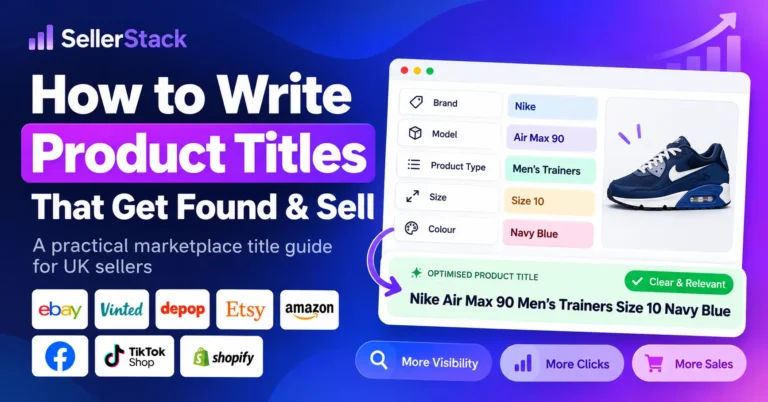
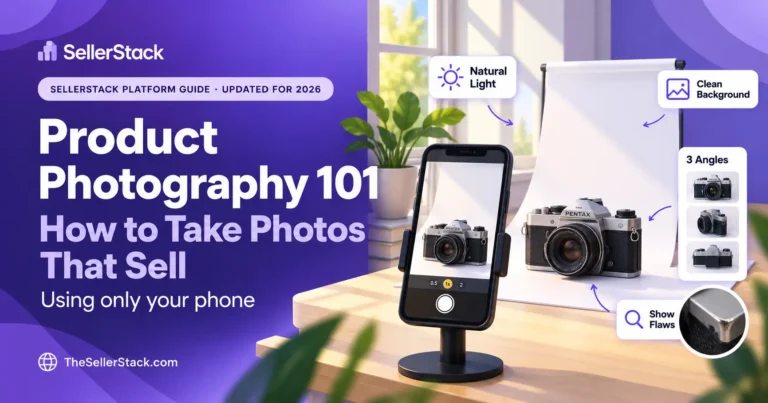
Build the delivery process with the Product Photography guide, the Product Titles guide and the AI Tools guide.
7. Create practical guides, workshops or a seller community
Once you have repeatable experience in a category or process, you can package that knowledge into a guide, workshop, short course or community. The strongest education products solve a defined problem and show where the method does not apply.
Credible education products
- A category-specific sourcing and identification workshop
- A listing-photography session with practical exercises
- A stock and inventory organisation workbook
- A marketplace-fee and profit-planning class
- A guided programme for creating the first 20 listings
- A community focused on accountability and process improvement
Avoid selling certainty you cannot provide. Do not promise income, guaranteed products or permanent marketplace tactics. Information about tax, law, safety or regulated products should link to current official guidance and stay within your competence.
UK tax, consumer and compliance checks
The exact obligations depend on what you sell, how regularly you sell it and whether you operate as an individual or through a company. The following checks provide a starting point, not personal legal or tax advice.
Are you trading?
GOV.UK says you are likely to be trading when, for example, you sell regularly to make a profit, make items to sell for profit, earn commission from selling for other people or receive payment for a service. Read the official Working for Yourself guidance if you are unsure.
The trading allowance
The UK trading allowance can provide up to £1,000 of tax-free trading income in qualifying circumstances. The threshold concerns gross trading income before expenses, not profit. HMRC states that people with gross trading income above £1,000 generally need to register for Self Assessment, although individual circumstances and exceptions matter. Read the current HMRC trading-allowance guidance and keep records from the beginning.
Online selling and customer rights
Business sellers must provide required information before an online order and follow rules covering delivery, cancellation, returns and refunds. Digital downloads have additional considerations around cancellation and when access begins. Check the current online and distance-selling rules.
Product safety and insurance
Repairing, importing, manufacturing or branding products can increase your responsibilities. Identify the relevant safety, labelling, traceability and documentation requirements before selling. Consider suitable business and product-liability insurance, particularly when handling client stock, electronics or products capable of causing injury.
Personal data and account access
A listing service, community or digital business may collect client and customer information. Use only the data required, secure it properly and limit account permissions. Consult the Information Commissioner’s Office guidance when your service handles personal data.
SellerStack’s business and seller tools can help with planning, but calculators do not replace official guidance or professional advice.
Tools matched to each business model
Choose tools after deciding what work needs improvement. Buying software before validating the business simply adds a recurring cost.
| Business model | Useful starting tools | Possible upgrade |
|---|---|---|
| Used-tech refurbishment | Testing checklist, secure data-erasure process and SellerStack profit calculator | Category-specific diagnostic equipment |
| Digital products | Spreadsheet or document software, simple design tool and payment platform | Canva, email marketing or dedicated digital delivery |
| Specialist product brand | Research spreadsheet, Product Pricing Calculator and sample-testing process | Accounting, inventory and product-research software |
| Vintage reselling | eBay Product Research, inventory reference and photography setup | ZIK Analytics or cross-listing software when volume supports it |
| Content brand | Phone, editing software, editorial plan and email list | Design, scheduling and analytics tools |
| Listing service | Photography setup, client checklist and secure file storage | Photoroom, Canva or tested cross-listing software |
| Seller education | Presentation or document software and a live workshop platform | Course delivery, community or email software after demand is proven |
Compare suitable research, shipping, listing and business software on the Recommended Seller Tools for UK Online Sellers page.
How to choose the right business model
Score each idea against the six questions below. A model that receives several weak answers is not ready for investment.
1. Existing advantage
What do you understand, own or access that a new competitor would need time to develop?
2. Starting capital
How much can you risk without relying on quick sales to pay essential bills?
3. Weekly time
Can the work fit around sourcing, employment, family and current orders?
4. Preferred work
Do you prefer products, repair, client contact, teaching, writing or content production?
5. Risk tolerance
Are you comfortable holding stock, handling client property or waiting months for an audience?
6. Evidence of demand
What real enquiry, presale, order, search behaviour or customer interview supports the idea?
A 30-day business-idea validation plan
Week 1: define the customer and problem
- Write one sentence describing the customer and the problem.
- Identify five direct alternatives already available.
- List the reason someone might choose your offer.
- Speak to at least five relevant people or review genuine customer questions.
Week 2: calculate the smallest viable test
- Estimate the full test cost and the downside if nothing sells.
- Choose one product, service package or minimum digital resource.
- Check the essential tax, safety, customer and marketplace requirements.
- Set a maximum amount of time and money for the test.
Week 3: present the offer
- Create one clear sales page, listing or service proposal.
- State exactly what is included, the price and who it suits.
- Show the offer to a small relevant audience.
- Record questions and objections instead of defending the first version.
Week 4: review evidence
- Count enquiries, orders, conversion, delivery time and total cost.
- Separate compliments from buying behaviour.
- Identify what customers understood incorrectly.
- Decide whether to continue, change the offer or stop.
A stopped test is not necessarily a failure. Discovering that a model does not fit your skills, market or available time can protect far more money than forcing it to continue.
Check the numbers before committing
Use SellerStack’s free calculators to test marketplace fees, profit, ROI, pricing, shipping costs and break-even points.
Explore Free SellerStack ToolsOnline business ideas for resellers: FAQs
What online business can a reseller start with little money?
An e-commerce listing service or a small digital product can be tested with existing equipment and limited stock. Low financial cost does not mean no work: both require a useful offer, customer research and a way to reach buyers.
Which reseller business idea can produce revenue fastest?
Specialist reselling and service work can produce revenue faster because you can sell an existing item or skill directly. Content brands, courses and product brands normally require more validation before meaningful revenue arrives.
Can I run more than one business model?
Yes, but test one new model at a time. For example, an established vintage reseller might add a photography service or a small sourcing workbook without abandoning existing sales.
Do UK resellers need to register as self-employed?
It depends on whether you are trading and your circumstances. GOV.UK says regular selling for profit, making products for profit, earning commission and charging for services can indicate trading. Gross trading income above the relevant allowance can trigger registration requirements. Check current HMRC guidance or seek professional advice.
Is a private-label or specialist product brand suitable for beginners?
It can be, but it carries more capital and compliance risk than selling a small number of existing products. Start with research, samples, product-safety checks and the smallest responsible stock order.
Which model suits someone who does not want to hold stock?
Digital products, listing services, content and education avoid owning resale inventory. A listing service may still involve temporarily handling client stock, so responsibility, storage and insurance should be agreed in writing.
Should I leave reselling to start one of these businesses?
Usually not at the testing stage. Your existing reselling activity supplies income, experience and customer insight. Run a controlled test first and expand only when the new model produces consistent evidence.
SellerStack verdict
Choose the business model that fits your current advantage—not the one that looks easiest in a short social-media video. Vintage stock and services suit people who want a faster test. Digital products and content suit patient creators with a clear audience problem. Refurbishment and specialist brands suit sellers prepared to manage technical, stock and compliance risk.
Start small, calculate the downside and look for a real buying signal before adding stock, software or complexity.