SELLERSTACK BEGINNER PILLAR GUIDE · UPDATED FOR 2026
How to Start Reselling Online in the UK
Learn the complete beginner process from researching and sourcing stock to pricing for profit, choosing marketplaces, creating listings, shipping orders and keeping better business records.
Reselling can start very simply: sell a few items you already own, learn how online marketplaces work, then use what you learn to make better sourcing, pricing and selling decisions.
You do not need a warehouse, a large budget or a complicated software stack to begin. What matters at the start is learning the full process: research the item, understand the numbers, choose the right marketplace, create a clear listing, fulfil the order properly and keep usable records.
How do you start reselling online in the UK?
Start with a small number of unwanted items from your own home. Research realistic sold prices, choose a marketplace that suits the product, create clear photographs and listing information, price with all costs in mind, then complete the sale and record the result.
Once you understand that process, you can begin sourcing stock intentionally and reinvesting only where the numbers make sense.
Prefer a shorter step-by-step roadmap?
Use the Start Reselling Hub to move through sourcing, pricing, marketplace choice, listings, shipping and business basics in the right order.
1. Start Small and Learn the Selling Process
The safest way to learn reselling is usually to begin with items you already own and no longer need. That lets you practise the mechanics of selling without putting fresh money into inventory before you understand the process.
-
Choose a few suitable items from home.
Look for products that are easy to identify, photograph, price and post. -
Research what similar items have actually sold for.
Asking prices show what sellers hope to receive. Completed or sold listings give you better evidence of what buyers have paid. -
Choose the marketplace that fits the item.
Different platforms attract different buyers and use different listing, fee and fulfilment models. -
Create an accurate listing.
Use clear photographs, a descriptive title, useful product details and an honest condition description. -
Complete the order properly.
Pack the item, check the finished parcel, dispatch it using the agreed method and retain the transaction information. -
Review the result.
Compare the final selling price with your actual costs and learn what you would change next time.
SellerStack Tip: Your first sales are training
Do not judge your first few listings only by the cash they generate. Use them to learn photography, titles, buyer communication, packaging, postage and record-keeping before you start buying larger amounts of stock.
Quick-start checklist
- Find three to five items you no longer use.
- Identify the exact brand, model, size or specification where relevant.
- Research realistic sold prices.
- Check whether postage will materially affect the economics.
- Take clear photographs showing condition and important details.
- Write an accurate title and description.
- Choose a price based on evidence rather than guesswork.
- Keep a record of the transaction once it sells.
2. Understand the Difference Between Casual Selling and Trading
Before you begin deliberately buying stock to resell, understand that HMRC does not treat every online sale in the same way.
Selling unwanted personal possessions is different from buying or making goods with the intention of selling them for profit. HMRC says that if you buy or make goods to sell at a profit, you are likely to be trading.
The £1,000 trading allowance
The UK trading allowance can apply to up to £1,000 a year of gross trading income. If your gross trading income is more than £1,000 in a tax year, you will generally need to tell HMRC and may need to register for Self Assessment. Exceptions and individual circumstances can affect the position.
Read the current SellerStack HMRC guide before relying on a simple threshold alone.
Marketplace reporting is not the same as owing tax
Digital platforms may have obligations to collect and report seller information to HMRC. A platform reporting information about you does not automatically mean you owe tax. Tax depends on the nature of your activity and the relevant tax rules.
HMRC & Online Selling
Understand trading, platform reporting, Self Assessment and the difference between selling possessions and running a resale activity.
Threshold Checker
Use your figures to identify UK seller thresholds and rules that may need closer attention.
General information only. Your tax treatment can depend on your circumstances. Check current HMRC guidance or speak to a qualified tax or accounting professional where appropriate.
3. Decide Where Your Stock Will Come From
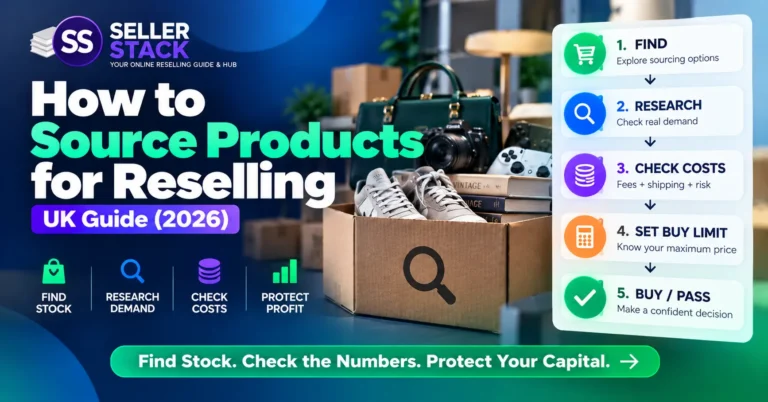
Once you have practised with your own items, sourcing becomes the next skill. The goal is not to find the cheapest stock. It is to find stock where demand, achievable selling price, condition and total costs leave enough room for a worthwhile return.
Your Own Home
The lowest-risk starting point. Useful for learning how different product categories behave without adding inventory cost.
Charity Shops
Useful for one-off second-hand finds, but condition, brand, demand and realistic resale value need checking before purchase.
Car Boot Sales
Negotiation can create opportunities, but a low asking price does not remove the need to research the product.
Local Marketplaces
Useful for bundles and larger items where collection can make the economics more attractive than postage.
Retail Clearance
A discount is only useful when genuine resale demand and enough margin still exist after all selling costs.
Wholesale
Better suited to sellers who already understand demand, sell-through, cash flow and the risk of holding multiple units.
Beginner decision
If you have not yet completed a handful of ordinary online sales, learn the process before committing significant money to wholesale stock, pallets or complicated fulfilment models.
Learn how to judge a buying opportunity
Go deeper into demand, resale value, condition, competition, buying limits and sourcing channels.
4. Research the Deal Before You Buy
A product can look attractive and still be a poor resale purchase. Before spending money, answer a few basic questions.
- Are comparable items actually selling?
- What is a realistic selling price for this condition and version?
- How much competition already exists?
- Are there faults, missing parts, repairs or cleaning costs?
- What will marketplace fees, postage and packaging cost?
- How much cash profit could remain?
- What return would that produce on the money tied up in stock?
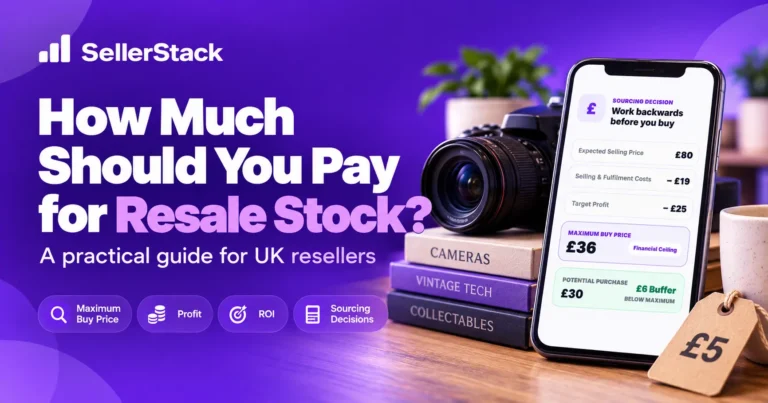
- What is the maximum price you can pay and still meet your target?
Maximum Buy Price Calculator
Work backwards from the expected selling price, costs and your required return to estimate the highest buying price the opportunity can support.
A £5 item is not automatically a good deal
Imagine an item costs £5 and similar products appear to sell for around £30. The £25 difference is not your profit.
You still need to consider platform charges, postage you pay, packaging, advertising, preparation, returns risk and any other relevant costs. Only after those are included can you judge the likely profit and ROI.
5. Choose the Marketplace That Fits the Product
Do not choose a marketplace only because it is the one you already know. Think about the product, the likely buyer, the listing format, selling costs and fulfilment process.
| Platform | Often considered for | What to check before listing |
|---|---|---|
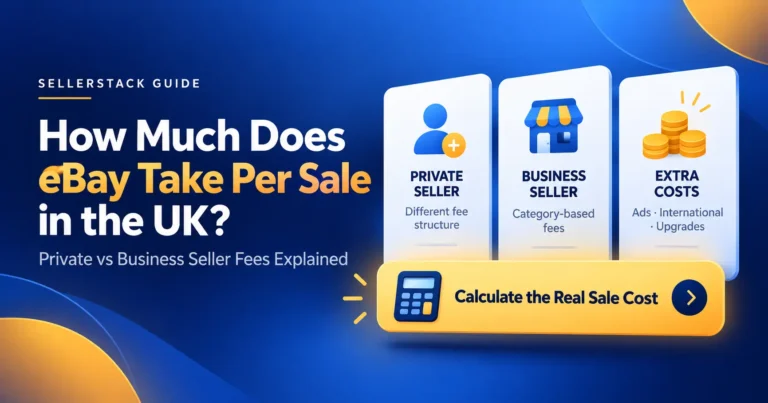
| eBay | Broad product range, collectables, electronics, parts, clothing and specialist items | Seller type, category costs, optional promotion, postage and listing settings |
| Vinted | Clothing, footwear, accessories and second-hand consumer goods | Buyer expectations, price competition, offers and integrated shipping options |
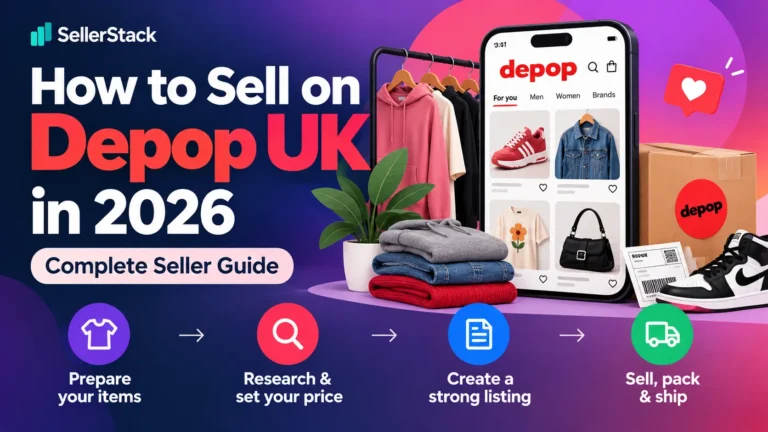
| Depop | Fashion-led, vintage, streetwear and visually distinctive clothing | Payment costs, optional boosting, presentation and shipping method |
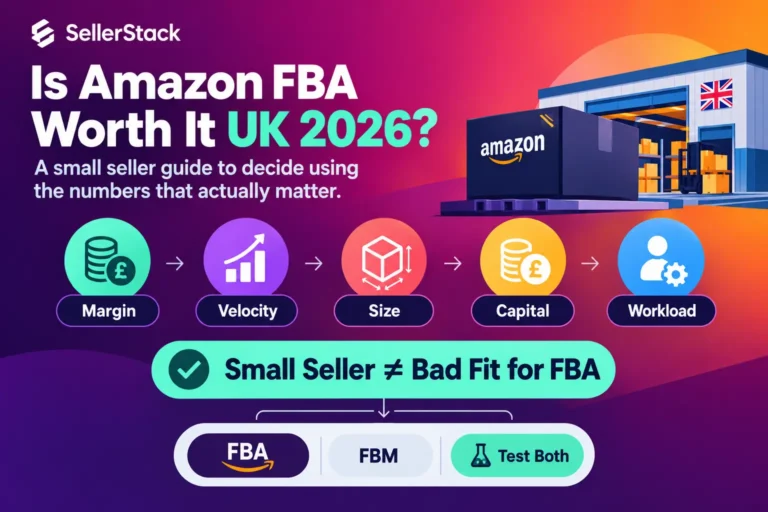
| Amazon | New products, repeatable inventory and sellers considering FBA or merchant fulfilment | Referral fees, fulfilment, storage, account costs and product restrictions |
| Facebook Marketplace | Local sales, bulky items and products where collection may be practical | Payment method, collection or delivery, buyer communication and selling costs |
Fees change
Avoid relying on an old fee table when making a live selling decision. Use the current platform guidance and SellerStack’s marketplace calculators for the seller type and product you are actually using.
Compare where to sell
Explore marketplace guides, comparison resources and platform-specific profit calculators.
6. Price the Item With the Full Sale in Mind
Pricing is where many beginners confuse revenue with profit. The amount the buyer pays is only the starting point.
Basic reseller profit model
Sale revenue − stock cost − selling costs = estimated net profit
Selling costs can include marketplace charges, payment processing, postage, packaging, promoted listings, preparation and other relevant expenses.
Profit alone also does not tell the whole story. Two products can make the same £20 profit while tying up very different amounts of money.
Profit
How much cash could remain after the costs you include?
Margin
How much of the sale revenue remains as profit?
ROI
How efficiently is the money invested in stock generating profit?
Know the target selling price
Check the complete sale
Know your lowest safe price
Compare the return on stock
For the wider pricing process, use the Pricing & Profit Hub .
7. Build a Listing That Is Easy to Find and Understand
A strong listing does not need exaggerated wording. It needs enough accurate information for the right buyer to recognise the item, judge its condition and decide whether the price makes sense.
-
Identify the product correctly.
Check the brand, model, size, version, material or specification before writing anything. -
Photograph it clearly.
Use good light, a clean background, useful angles and close-ups of labels, details and flaws. -
Write a descriptive title.
Prioritise useful product identifiers over vague promotional language. -
Complete important product details.
Add measurements, specifications, condition information and what is included. -
Set the price and delivery terms.
Make sure the financial result and fulfilment expectations work before publishing.
Photography
Descriptions
Improve the whole listing, not one field at a time
Work through photography, titles, descriptions, pricing, marketplace fit and slow-listing problems.
8. Treat Shipping as Part of the Profit Decision
Shipping is not something to think about after the item sells. Parcel size, packaging and service choice can affect both the buyer experience and your final margin.
- Pack the item appropriately. Protect it without creating unnecessary bulk.
- Measure and weigh the finished parcel. Packaging changes the dimensions and weight.
- Compare suitable services. Look beyond the headline price to speed, tracking and protection where relevant.
- Include the complete fulfilment cost. Postage and packaging are part of the economics of the sale.
- Dispatch and retain the information. Keep the records needed to understand the completed transaction.
Compare Shipping Costs
Enter current courier quotes and compare the complete fulfilment cost.
Check Parcel Size
Check the finished parcel dimensions and weight before purchasing postage.
For packaging, courier and fulfilment guidance, visit the Shipping & Fulfilment Hub .
9. Keep Records From the First Sale
Good records are not only for tax returns. They help you understand whether the business is actually improving.
- Record the sale value rather than relying only on the marketplace payout.
- Keep stock purchase costs.
- Record marketplace fees and advertising charges where applicable.
- Record postage and packaging costs.
- Track refunds, returns and other relevant adjustments.
- Keep enough detail to reconcile marketplace transactions with money received.
- Review your records regularly instead of rebuilding them months later.
A marketplace payout is not the same as sales or profit
A payout may already have deductions taken from it. Keep enough information to understand the original transaction, the deductions and the other costs connected with the sale.
Build clearer business records
Understand sales, payouts, profit, HMRC reporting, VAT and record-keeping without mixing the figures together.
10. What to Focus on During Your First Month
Your first month does not need to be about rapid growth. It should be about creating a repeatable process you understand.
Improve Research
Compare sold evidence more carefully and learn which product details materially affect value.
Improve Buying Discipline
Set a maximum buying price before negotiating or committing to stock.
Improve Listings
Create a repeatable photography, title and description workflow instead of starting from zero each time.
Improve Fulfilment
Keep packaging materials organised and learn which parcel formats and dispatch methods suit your stock.
Improve Records
Record transactions as they happen so profit and cash flow are easier to understand.
Review Completed Sales
Use real outcomes to improve your next sourcing, pricing and listing decisions.
When should you start scaling?
Scale when you can repeat the process with reasonable consistency — not simply because one item produced a good margin. More inventory also means more cash tied up, more listings to manage, more fulfilment work and more records to maintain.
Common Beginner Reselling Mistakes
Avoid these early mistakes
- Buying before researching. A low purchase price does not prove demand.
- Using asking prices as evidence of value. Research realistic sold prices where possible.
- Ignoring shipping and packaging. Fulfilment can materially reduce margin.
- Choosing a marketplace by habit. Match the product to the platform and buyer.
- Pricing from revenue alone. Include all relevant selling costs.
- Hiding flaws or writing vague listings. Accuracy builds buyer confidence and reduces avoidable disputes.
- Keeping poor records. Sales, payouts and profit are different figures.
- Scaling too quickly. Prove the process before tying up significant money in stock.
For a deeper breakdown, read Beginner Reseller Mistakes: What New Sellers Get Wrong .
Essential SellerStack Resources for Beginners
Start Reselling
Your main beginner roadmap across the entire selling process.
Pricing & Profit
Work out buying limits, selling prices, profit, margin and ROI.
Listings & Selling Skills
Improve photography, titles, descriptions and listing performance.
Shipping & Fulfilment
Plan packaging, parcel size, courier choice and dispatch workflow.
Frequently Asked Questions
How much money do I need to start reselling?
You can begin without buying stock by selling suitable unwanted items you already own. That is usually a lower-risk way to learn the process before putting money into inventory.
If you are planning a sourcing budget, see How Much Money Do You Need to Start Reselling?
Do I need a business licence to start reselling in the UK?
There is no single general “reselling licence” required simply to list ordinary goods online, but your legal, tax and consumer obligations depend on what you sell and whether you are acting as a trader. If you begin buying goods to sell for profit, review the relevant HMRC and marketplace requirements rather than treating the activity as a casual clear-out.
Which marketplace should a beginner use?
It depends on the product and the selling model. Clothing sellers may compare eBay, Depop and Vinted, while electronics, collectables, new stock or bulky local items can point toward different platforms. Use the Marketplace Hub to compare the options.
How do I know whether an item is profitable enough to buy?
Estimate a realistic selling price, include all relevant costs, calculate expected profit and compare the return with the money required to buy the stock. The Maximum Buy Price Calculator and ROI Calculator are useful for this decision.
Do online marketplaces report sellers to HMRC?
Digital platforms can have reporting obligations and may collect and report seller information to HMRC. That reporting is separate from whether you actually owe tax. Use the SellerStack HMRC guide for the current explanation.
What should I do after my first few sales?
Review what sold, what did not, the profit you actually made, how long the process took and where the biggest friction occurred. Then improve one part of the process at a time — sourcing, pricing, marketplace choice, listings, shipping or record-keeping.
Learn the Whole Sale Before You Try to Scale It
Reselling becomes much easier to judge once you stop treating sourcing, pricing, listings and shipping as separate activities.
A strong buying decision creates room for profit. A suitable marketplace puts the item in front of the right buyers. A clear listing reduces uncertainty. Sensible fulfilment protects the margin. Good records tell you whether the process actually worked.
Start small, use real results to improve the next decision and only add more stock when the process is working consistently.
Ready to Put the Guide Into Action?
Follow SellerStack’s beginner roadmap, then move into sourcing once you are ready to start evaluating stock intentionally.