Selling clothes online can be one of the easiest ways to turn unwanted items into cash — and for some people, it becomes the first step towards building a reselling side hustle.
But before creating your first listing, there is an important decision to make:
Where should you sell your clothes?
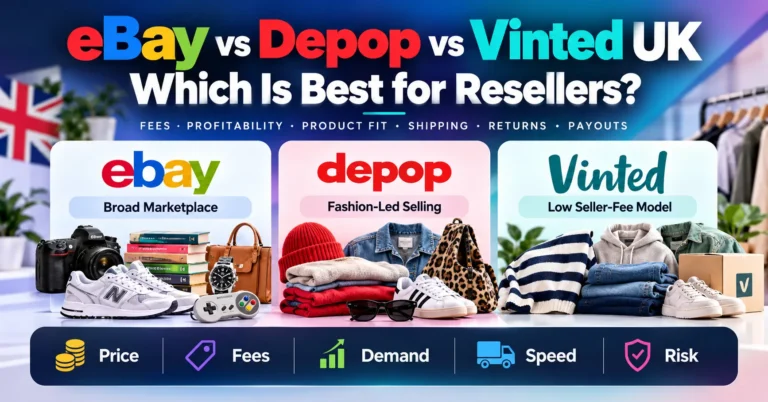
For UK sellers, three of the most familiar options are eBay, Depop and Vinted. All three can work well, but they appeal to different buyers and offer different selling experiences.
Vinted is particularly well suited to straightforward wardrobe clear-outs and everyday fashion. Depop has a stronger fashion-led identity and can be a natural fit for vintage, streetwear and distinctive clothing. eBay offers a much broader marketplace and gives sellers access to buyers across fashion and many other product categories.
The right choice can affect:
- how easy it is to create and manage listings
- the types of buyers you reach
- the selling costs you need to consider
- how postage is handled
- the prices your items may achieve
- how easily you can expand beyond casual selling
There is no single platform that is best for every seller or every item.
In this guide, we’ll compare eBay vs Depop vs Vinted for UK sellers in 2026, explain the main differences in plain English and help you decide where to start.
Quick Answer: eBay, Depop or Vinted?
If you’re completely new to selling clothes online, the simplest way to think about the three marketplaces is:
| If you want to… | Good starting point |
|---|---|
| Clear out everyday clothes from your wardrobe | Vinted |
| Sell vintage, Y2K or streetwear | Depop |
| Sell across clothing and other product categories | eBay |
| Start selling online with a simple process | Vinted |
| Build a fashion-focused shop or profile | Depop |
| Sell a wider variety of stock as you grow | eBay |
| Sell premium or specialist items | Compare eBay, Depop and Vinted before listing |
SellerStack Verdict: For a simple wardrobe clear-out, start with Vinted. For style-led, vintage or streetwear inventory, consider Depop. If you want maximum flexibility across clothing and other categories, eBay is usually the stronger all-round starting point.
But don’t assume every item belongs on the same marketplace. As you gain experience, it can make sense to use different platforms for different types of stock.
What This Guide Covers
eBay
eBay is one of the UK’s best-known online marketplaces and differs from Depop and Vinted in one important way: it isn’t primarily a fashion platform.
Alongside clothing, sellers can list products across a wide range of categories, including:
- electronics
- collectables
- books
- toys
- home and garden
- tools
- vehicle parts
- trainers
- watches and jewellery
- antiques and specialist items
That breadth makes eBay useful for someone who starts by selling clothes but may eventually want to sell other types of stock.
For UK-based private sellers, standard selling has also changed considerably. Private sellers currently receive 300 free listings per month and generally pay no transaction fees on standard domestic sales, although optional upgrades, international selling and certain categories can result in additional charges. Business sellers operate under a different fee structure.
eBay may suit you if you:
- want access to a broad marketplace
- sell clothing alongside other types of products
- have branded, specialist or collectible items
- want more control over how listings are structured
- expect your selling activity to become more advanced over time
Things to know
eBay gives sellers plenty of options, but that also means there is more to learn.
Depending on how you sell, you may need to become familiar with listing formats, item specifics, postage settings, returns, seller standards and — for business sellers — category-based fees.
Want to learn the platform properly? Read our Ultimate Guide to Selling on eBay UK or use the eBay Fee & Profit Calculator to examine the numbers before listing.
Depop
Depop is a fashion-focused marketplace with a strong emphasis on individual style, discovery and seller identity.
It is particularly relevant for items such as:
- vintage clothing
- Y2K fashion
- streetwear
- branded fashion
- distinctive or unusual pieces
- curated clothing collections
Presentation can matter a great deal on Depop. Clear original photographs, accurate descriptions and a consistent shop style can help shoppers understand what you sell and make your listings easier to browse.
For UK sellers, Depop currently charges no standard selling fee, although transactions through Depop Payments carry a 2.9% + £0.30 payment-processing fee. Optional Boosted Listings can also create additional costs; the current UK boosting fee is 12% for applicable boosted sales.
Depop may suit you if you:
- enjoy selling fashion rather than general merchandise
- source vintage, streetwear or trend-led pieces
- want to build a recognisable seller profile
- enjoy photography and presentation
- have stock with a distinctive style or identity
Things to know
Depop is more specialised than eBay, so it will not suit every type of stock.
You also shouldn’t assume that simply listing an item as “vintage” or fashionable will make it sell. Demand, condition, sizing, photography, price and competition still matter.
New to Depop? Read our How to Sell on Depop UK: Complete 2026 Seller Guide for a step-by-step introduction.
Vinted
Vinted has built its UK selling experience around straightforward second-hand buying and selling, making it particularly accessible for people who want to sell clothing they already own.
It can be a natural place to start with:
- everyday clothing
- shoes
- accessories
- children’s clothing
- lower and mid-priced fashion
- wardrobe clear-outs
One of Vinted’s biggest advantages for beginners is the relatively simple fulfilment process.
For integrated shipping, the buyer chooses an available delivery option and pays the shipping cost at checkout. The seller then receives a prepaid Vinted-generated shipping label and sends the item using the selected method.
Vinted may suit you if you:
- are selling online for the first time
- want to clear unwanted clothing
- prefer a straightforward listing process
- want integrated postage options
- sell everyday fashion at competitive prices
Things to know
Price still matters.
Vinted gives buyers several ways to compare items and interact with sellers, so it can be difficult to rely on ambitious asking prices when many similar products are available.
Vinted should no longer be described as a marketplace only for casual private sellers. UK shoppers can also encounter listings from Vinted Pro sellers, so the distinction between casual and business selling matters.
Want a deeper walkthrough? Read our Guide to Selling on Vinted UK.
eBay vs Depop vs Vinted at a Glance
| Feature | eBay | Depop | Vinted |
|---|---|---|---|
| Best known for | Broad marketplace | Fashion and style-led selling | Second-hand and everyday fashion |
| Good for beginners | Good | Good | Very good |
| Fashion focus | Moderate | Very strong | Very strong |
| Vintage/streetwear | Good | Very good | Good |
| Wider product categories | Very strong | Limited | More limited than eBay |
| Listing flexibility | Very strong | Good | Simple |
| Integrated shipping | Yes, depending on listing/account | Available | Strongly integrated |
| Useful for casual wardrobe selling | Yes | Yes | Very good |
| Useful as selling becomes more advanced | Very good | Good for fashion-led sellers | Depends on selling model |
SellerStack Insight
Don’t choose a marketplace based on fees alone.
The platform with the lowest direct seller costs won’t automatically produce the best result. Demand, achievable selling price, competition, postage, selling costs and the type of buyer you’re trying to reach all matter.
How Much Does It Cost to Sell Clothes Online?
Selling fees matter, but they should not be the only reason you choose a marketplace.
A platform with very low seller fees can still produce a weaker result if buyers expect lower prices, while a marketplace with higher selling costs may sometimes be worthwhile if your item can achieve a stronger selling price.
The better question is:
How much money could you realistically keep after all the costs of making the sale?
For beginners, here is the simplest way to understand the current UK fee structures.
2026 UK Seller Fee Comparison
| Platform | Standard selling costs | Other costs to know about |
|---|---|---|
| eBay — Private Seller | UK-based private sellers generally pay no transaction fees on standard sales and receive 300 free listings per month. | Fees can still apply for optional listing upgrades, listings beyond the free allowance and some international selling. |
| eBay — Business Seller | Business sellers pay category-based final value fees. The standard Clothes, Shoes & Accessories rate is currently 11.9%, plus a per-order fee. | A 0.35% regulatory operating fee also applies, along with any optional advertising, Shop or international fees where relevant. |
| Depop | UK sellers currently pay no standard Depop selling fee, but Depop Payments charges 2.9% + £0.30. | Optional Boosted Listings can add a 12% boosting fee when the applicable conditions are met. |
| Vinted | Standard private selling generally does not involve a seller commission deducted from the item price. | Buyers pay an additional platform protection charge at checkout. Optional seller visibility services can also cost extra. |
eBay confirms that UK private sellers currently receive 300 free listings each month and pay no transaction fees on standard sales outside its stated exceptions. For eBay business sellers, the current general Clothes, Shoes & Accessories final value fee is 11.9%, plus a £0.30 per-order fee for orders of £10 or less or £0.40 above £10. eBay also currently charges business sellers a 0.35% regulatory operating fee.
Depop currently charges UK sellers no standard selling fee, but its payment-processing charge is 2.9% + £0.30 and is calculated on the item sale price plus shipping and applicable taxes. Its current UK Boosted Listings fee is 12% for applicable boosted sales.
On Vinted, buyers see an additional Buyer Protection charge included in the purchase total, rather than that charge being deducted as a standard seller commission. Current UK listings display this separately from the item price and postage.
What Do These Fees Actually Mean?
At first glance, Vinted and private selling on eBay can look especially attractive because neither typically deducts a standard transaction commission from the seller on an ordinary private sale.
But lowest fee does not automatically mean highest profit.
Imagine you have a jacket that could realistically sell for:
| Marketplace | Potential selling price | Example direct selling costs | Amount before stock/postage costs |
|---|---|---|---|
| Vinted | £25 | £0 | £25 |
| Depop | £30 | £1.17 payment processing | £28.83 |
| eBay | £35 | £0 for an eligible private sale | £35 |
In this simplified example, the marketplace with the lowest selling price is not necessarily the most profitable one.
The figures are illustrative only, but they demonstrate an important principle:
Don’t compare fees without also comparing the price an item is realistically likely to achieve.
A £30 sale with a small fee can leave you better off than a £22 fee-free sale.
And the opposite can also be true.
Private Seller vs Business Seller Matters
This distinction is particularly important on eBay.
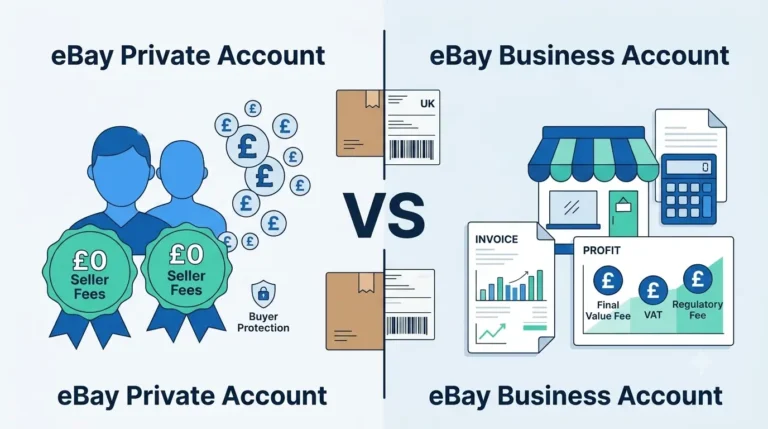
A private UK seller clearing unwanted clothing can have a very different cost structure from someone operating as an eBay business seller.
For example, an eligible private seller might sell a £40 jacket without an eBay transaction fee, whereas a business seller listing the same type of item may need to account for category-based final value fees, the per-order charge and the regulatory operating fee.
So when comparing marketplaces, make sure you are looking at the fee structure that actually applies to your type of selling activity.
SellerStack Tip
If you’re buying products specifically to resell for profit or your selling activity is becoming regular and business-like, don’t assume the rules and fee structures designed for occasional private selling will always apply to you.
We will cover the tax and business side later in the guide, but beginners should understand this distinction from the start.
Don’t Forget Optional Selling Costs
Marketplace commission is only one possible expense.
Depending on how you sell, your final profit may also be affected by advertising or promoted listings, postage, packaging, sourcing cost, cleaning or repairs, returns and other direct costs.
This is why comparing headline marketplace fees alone can be misleading.
For example, Depop’s standard UK selling fee may be zero, but choosing to boost a qualifying listing can introduce a substantial additional cost. Likewise, an eBay business seller using promoted listings may pay advertising costs on top of normal selling fees.
SellerStack Insight
Think about marketplace costs in three layers:
1. Mandatory selling costs Fees or payment-processing charges required to complete the sale.
2. Optional marketplace costs Promoted listings, boosting or other paid visibility features.
3. Your own selling costs Stock, postage, packaging, preparation and other expenses associated with the item.
Your actual profit is what remains after all relevant costs, not simply what is left after the marketplace fee.
Compare the Numbers Before You List
If you’re unsure which marketplace may leave you with the strongest return, use SellerStack’s free calculators to test different selling prices and costs before creating your listing.
Explore SellerStack Marketplace & Profit Calculators →
You can also use the eBay Fee & Profit Calculator if you’re comparing private and business eBay selling costs.
Fees Can Change
Marketplace pricing structures, seller programmes and optional services change regularly.
The figures in this guide were checked for September 2026, but always confirm the latest charges on the marketplace itself before making an important pricing or sourcing decision.
Shipping: Which Platform Makes Posting Clothes Easiest?
Shipping can make online selling feel either straightforward or unnecessarily complicated.
For a beginner, the important questions are not just “Which courier should I use?” but also:
How is the postage price set? Who pays for delivery? Do you receive a prepaid label? Is tracking added automatically? And how much control do you have over the delivery method?
eBay, Depop and Vinted now handle these things quite differently.
eBay Shipping
For UK private sellers, eBay’s delivery process is much simpler than it used to be.
For eligible listings, Simple Delivery is now the main delivery method for private sellers on eBay.co.uk. When you create the listing, eBay recommends a parcel size and available delivery options. Once the item sells, you receive a prepaid postage label and QR code.
Tracking is then added automatically to the order.
You can also set preferred couriers, with options including services such as Royal Mail, Evri and InPost depending on the parcel and listing.
If the buyer is paying for delivery, the postage charge is collected at checkout. If you choose to offer free postage, you pay for the standard Simple Delivery label instead.
That makes the current private-seller experience considerably more beginner-friendly than older versions of eBay.
There are still exceptions. Simple Delivery applies to eligible private listings, and custom postage is only available in certain circumstances. Business sellers can also have different postage options and requirements.
Best suited to: sellers who want a structured postage system but also value eBay’s broader marketplace and selling features.
Depop Shipping
Depop gives UK sellers more choice over how they fulfil an order.
If you use Depop Shipping via Evri, Depop provides a QR code and downloadable postage label after the sale. The service is tracked, so you do not need to manually add tracking when using the supplied Depop Shipping method.
Alternatively, sellers can choose an “Other” shipping method and organise delivery themselves.
That can be useful if you prefer a particular courier or already have your own postage process, but it also means taking responsibility for arranging and paying for the shipping method correctly.
Depop’s current terms state that buyers pay an additional amount for shipping, while sellers remain responsible for packing and dispatching the item and complying with the relevant shipping requirements.
This gives Depop a useful middle ground:
Depop Shipping provides an easier integrated option, while arranging your own shipping provides more flexibility.
Best suited to: sellers who want the option of an integrated label without being completely tied to one fulfilment approach.
Vinted Shipping
Vinted has one of the most tightly integrated shipping systems of the three platforms.
The buyer normally pays the shipping cost and selects their preferred available delivery provider during checkout.
As the seller, you can control which shipping providers you make available in your postage settings, although the exact options depend on your location. Once the item sells, Vinted sends you a prepaid shipping label.
That means the process is generally:
Buyer chooses delivery → buyer pays postage → Vinted provides the label → seller packs and sends the parcel.
Vinted currently requires sellers to dispatch within five business days, although an extension may sometimes be agreed through the platform.
For someone selling clothes online for the first time, this removes much of the need to calculate postage prices or purchase a separate shipping label.
Best suited to: beginners who want a straightforward, integrated postage process.
eBay vs Depop vs Vinted Shipping at a Glance
| Shipping feature | eBay | Depop | Vinted |
|---|---|---|---|
| Integrated prepaid labels | Yes, through Simple Delivery for eligible private listings | Yes, with Depop Shipping | Yes |
| Buyer can pay postage | Yes | Yes | Yes — normally built into checkout |
| Seller can offer free postage | Yes | Possible depending on setup | Not the typical integrated-shipping model |
| Seller can arrange own postage | Limited for eligible eBay private listings | Yes | More restricted when using integrated shipping |
| Automatic tracking | Yes with Simple Delivery | Yes with Depop Shipping | Yes with supported prepaid shipping |
| Beginner friendliness | Very good | Good | Very good |
| Shipping flexibility | Good, but depends on seller/listing type | Very good | More structured |
SellerStack Verdict: Which Is Easiest for Shipping?
For a complete beginner selling ordinary clothing, Vinted remains one of the simplest options because the buyer chooses and pays for delivery and the seller receives the shipping label.
However, the gap between Vinted and eBay is now much smaller.
eBay’s Simple Delivery has removed much of the postage setup that previously made the platform feel more complicated for private sellers. Eligible sellers now receive prepaid labels and automatic tracking in a very similar way.
Depop sits between the two. Its integrated Evri option is straightforward, but sellers can also arrange shipping independently when they want greater control.
So rather than choosing a marketplace purely because of its postage system, think about the entire selling experience.
The best platform for your item may still depend more on buyer demand, achievable price, selling costs and the type of clothing you’re selling.
SellerStack Tip
Before listing an item, check the packed parcel size, not just the size of the clothing itself.
A coat, pair of trainers or bulky bundle may move into a different parcel category once packaged, which can affect postage cost and your eventual profit.
Use the UK Parcel Size Checker to check whether your packed item fits common carrier limits. If you are arranging postage yourself, compare options with the UK Shipping Cost Comparison Calculator.
Which Platform Is Easiest for Beginners?
If you’ve never sold anything online before, the easiest marketplace is not necessarily the one with the fewest features.
What matters more is how quickly you can understand the basic process:
create a listing → communicate with buyers → make a sale → send the item → receive your money.
All three platforms are accessible to beginners, but the learning curve is different.
eBay
eBay gives sellers the most flexibility of the three marketplaces, but that also means there is more to learn.
When creating listings, you may encounter options for:
- categories and item specifics
- Buy It Now or auction-style listings
- postage and delivery settings
- offers
- returns
- promoted listings
- seller performance
- private or business selling
For a complete beginner, that can initially feel more complicated than Vinted or Depop.
However, eBay has become easier for UK private sellers in areas such as postage, particularly through Simple Delivery, which provides eligible sellers with prepaid labels and automatic tracking.
Once you understand the basic listing process, eBay’s extra controls can become an advantage rather than a drawback.
eBay is a good starting point if you:
- want to learn a marketplace you can continue using as your selling grows
- expect to sell more than clothing
- like having greater control over listings
- are prepared to spend a little more time learning the platform
Beginner verdict: Easy enough to start with, but it has the steepest learning curve of the three.
Depop
Depop is relatively straightforward to learn, particularly if you already feel comfortable using social or mobile-first apps.
Creating a listing is simple, but success on Depop can require more thought about how the item is presented.
A beginner may need to learn:
- how to photograph clothing attractively
- how to write useful descriptions
- how to price items realistically
- how offers and buyer messages work
- when boosting a listing is actually worthwhile
- how Depop Shipping or your own shipping method works
This means Depop can be technically simple while still requiring more effort from a merchandising and presentation perspective.
That distinction matters.
An item can be easy to list but still need strong photography, accurate details and sensible pricing to compete effectively.
Depop is a good starting point if you:
- mainly want to sell fashion
- enjoy photographing and presenting clothing
- have vintage, streetwear or trend-led stock
- like the idea of building a recognisable seller profile
Beginner verdict: Straightforward to use, especially for fashion-focused sellers, but presentation matters more than simply getting the listing live.
Vinted
For someone making their first few online sales, Vinted is probably the simplest of the three platforms to understand.
The listing process is relatively streamlined, and integrated shipping removes much of the postage setup beginners traditionally had to manage themselves.
For a typical sale, the process is broadly:
list the item → buyer purchases → receive the shipping instructions/label → pack and post → complete the transaction.
That simplicity makes Vinted particularly suitable for someone who wants to sell clothing from their own wardrobe without first learning a large number of marketplace settings.
There are still things to learn.
You need to describe items accurately, disclose condition issues, price competitively, respond appropriately to buyers and follow the platform’s shipping and transaction rules.
But there are generally fewer decisions to make before your first listing goes live.
Vinted is a good starting point if you:
- have never sold online before
- are clearing out your wardrobe
- want a simple listing process
- prefer integrated shipping
- want to learn selling without investing in stock immediately
Beginner verdict: Usually the easiest starting point for a first-time clothing seller.
Beginner Comparison at a Glance
| Beginner factor | eBay | Depop | Vinted |
|---|---|---|---|
| Creating a basic listing | Moderate | Simple | Very simple |
| Number of settings to learn | Higher | Moderate | Lower |
| Integrated postage experience | Strong for eligible private listings | Available | Very strong |
| Photography/presentation demands | Moderate | Higher | Moderate |
| Suitable for wardrobe clear-outs | Good | Good | Excellent |
| Suitable beyond clothing | Excellent | Limited | More limited than eBay |
| Room to grow into advanced selling | Excellent | Good for fashion sellers | Depends on selling model |
SellerStack Verdict: Which Is Easiest to Start With?
For most people who simply want to sell a few unwanted clothes, Vinted is the easiest place to begin.
Its relatively streamlined listing process and integrated postage system allow you to learn the fundamentals of online selling without dealing with too many settings at once.
Depop is also beginner-friendly, particularly if your interest is vintage, streetwear or fashion-led selling. The platform itself is straightforward, but good presentation can play a larger role.
eBay takes a little more learning, but it offers substantially more flexibility. If you already know that you want to sell across different product categories or build a more developed reselling operation, learning eBay from the beginning can be worthwhile.
The important point is that “easiest” and “best” are not always the same thing.
A platform can be extremely easy to use but still be a poor fit for a particular item.
SellerStack Tip
If you’re completely new to online selling, don’t begin by buying a large amount of stock.
Start with three to five items you already own.
That lets you practise:
- taking photos
- writing titles and descriptions
- responding to buyers
- packing items
- using shipping labels
- completing transactions
without putting much money at risk.
Once you understand the process, you can decide whether you actually enjoy reselling before investing in inventory.
How Buyers Behave on eBay, Depop and Vinted
Understanding the platform is only half the job.
You also need to understand how buyers find, compare and respond to listings, because the same item can perform very differently depending on where it is listed.
A better way to think about it is this:
Each marketplace encourages a different style of browsing and buying.
eBay Buyers: Search and Comparison Matter
eBay has a strong search-led shopping experience.
Buyers can search by keyword and narrow results using filters such as brand, size, condition, price, buying format and delivery options. They can also save searches, watch items and make offers where sellers allow it.
For clothing sellers, that means the information in your listing matters.
A buyer searching for:
“Barbour International black wax jacket men’s medium”
is much more likely to find a listing that clearly includes the relevant brand, product type, colour, size and condition than one simply titled:
“Men’s jacket.”
You should therefore treat the eBay title and item specifics as part of your selling strategy, not as boxes to complete quickly.
Good eBay listings should make it easy for a buyer to answer:
Is this exactly the item I’m looking for?
That means accurate titles, useful item specifics, clear condition information and photographs that show the product properly.
Price also matters because buyers can easily compare similar listings and, where Best Offer is enabled, negotiate directly with sellers.
What This Means for Sellers
On eBay, focus heavily on searchability and detail.
Your listing should clearly identify the product before trying to make it sound exciting.
For example:
Better: Nike Air Max 95 Men’s Trainers UK 9 Black Grey Used
Weaker: Amazing Nike Trainers Must See
The first version gives searchers much more useful information.
Depop Buyers: Search Meets Discovery
Depop works differently.
Search is still important, but Depop also uses recommendation systems to show shoppers items based on factors such as their previous browsing, likes, purchases, preferred brands, styles and sizes.
Depop says its search ranking also considers listing relevance, popularity, seller location, shopping habits and listing information.
That means sellers have two jobs:
Help buyers find the item when they search for it, and make the item attractive enough to earn attention when it appears through recommendations.
Photography, styling and presentation therefore carry more weight than they might on a purely search-driven marketplace.
Depop specifically recommends accurate descriptions, relevant item information, measurements, condition details and photographs showing the item clearly, including flaws.
Buyers and sellers can also negotiate through Depop’s offer system. Buyers can submit an offer, sellers can accept, decline or counter it, and sellers can send offers to people who have liked an item.
What This Means for Sellers
On Depop, you need to think about both discoverability and presentation.
A good listing should still contain the practical information a buyer needs — brand, size, condition, measurements and style — but the photography and overall presentation can play a bigger role in getting someone to stop and open the listing.
This is particularly relevant for vintage, streetwear and style-led fashion, where shoppers may be browsing for inspiration rather than searching for one exact product.
That does not mean you need professional photography.
Clear natural light, a clean background and good images of the fit, fabric and details are far more important than trying to create an elaborate photo shoot.
Vinted Buyers: Price Comparison and Offers Are Part of the Experience
Vinted’s buying experience makes it easy for shoppers to compare second-hand items, and negotiation is built directly into the platform.
Buyers can use the Make an Offer feature to propose a lower price, while sellers can accept, reject or counter the offer. Vinted currently allows buyers to suggest a price up to 40% below the original item price. An accepted offer is not a completed sale until the buyer actually purchases the item.
That doesn’t mean you should automatically accept low offers.
It does mean that when pricing an item on Vinted, it can be sensible to think in terms of:
asking price → realistic negotiation range → minimum price you’re willing to accept.
The buyer also sees more than your item price at checkout. Postage is added separately, and Vinted’s integrated shipping system has the buyer choosing and paying for the available shipping method.
For lower-value clothing in particular, those additional checkout costs can affect how attractive the overall purchase feels.
A £5 item is not necessarily a £5 decision from the buyer’s point of view once the rest of the transaction cost is included.
What This Means for Sellers
On Vinted, competitive pricing can matter a great deal, especially where many similar items are available.
But that doesn’t mean “always be the cheapest.”
Instead, look at comparable items and consider:
- condition
- brand
- size
- demand
- photographs
- whether similar listings are plentiful
- the lowest price you’re genuinely willing to accept
Then set your asking price accordingly.
If you are comfortable accepting £18 for an item, for example, you may decide to list slightly above that rather than starting immediately at your minimum.
Just avoid setting an artificially high price purely to create room for negotiation. Buyers can compare competing listings very quickly.
Buyer Behaviour Comparison at a Glance
| Buyer behaviour | eBay | Depop | Vinted |
|---|---|---|---|
| Search is important | Very important | Important | Important |
| Recommendations/discovery | Present | Particularly important | Present |
| Detailed product information matters | Very important | Very important | Important |
| Strong photography matters | Important | Particularly important | Important |
| Offers/negotiation | Common where enabled | Built into the platform | Built into the platform |
| Price comparison | Easy | Easy | Easy |
| Seller/profile style | Less central | More important | Less central |
SellerStack Insight
The best listing strategy changes with the marketplace.
On eBay, prioritise accurate searchable titles, item specifics and detailed product information.
On Depop, combine strong listing information with appealing photography and presentation.
On Vinted, make the listing easy to understand, price it realistically and decide in advance how much room you are willing to leave for offers.
But there is one rule that applies everywhere:
Never sacrifice accuracy for attention.
Clear titles, honest condition descriptions, useful photographs and realistic pricing will serve you better than exaggerated wording on any marketplace.
One Listing Shouldn’t Automatically Be Copied Everywhere
If you eventually sell on more than one platform, don’t assume the exact same listing should simply be copied and pasted unchanged.
The core facts should remain consistent, but you may want to adjust how the listing is presented.
An eBay title may need to be highly search-focused. A Depop listing may benefit from stronger style context and presentation. A Vinted listing may need especially clear pricing and condition information.
The product is the same.
The buyer journey is not.
Pros and Cons of eBay, Depop and Vinted
By this point, you can probably see why there is no universal winner.
Each marketplace makes some parts of selling easier while creating trade-offs elsewhere.
Rather than repeating everything we’ve already covered, use this section as a decision guide: which advantages matter most to you, and which disadvantages are you willing to accept?
eBay: Pros and Cons
Pros
Broad range of products
eBay is useful if you want to sell clothing now but may later expand into electronics, collectables, homeware, toys or other categories.
Flexible listing options
Sellers have more control over how products are presented and sold, including fixed-price listings, auctions, offers, item specifics and other listing settings.
Good fit for detailed search-led buying
Because buyers can search using specific product details, eBay can work particularly well for identifiable brands, models, sizes and specialist items.
Strong long-term flexibility
Someone who begins by selling unwanted clothes can continue using eBay as their selling activity becomes more organised or moves into additional categories.
Simpler private-seller postage than before
For eligible UK private listings, Simple Delivery now provides prepaid labels and automatic tracking, reducing some of the shipping complexity eBay used to involve.
Cons
More to learn
The extra listing options, seller settings and policies can make eBay feel more complicated when you’re completely new.
Business selling has additional costs
If you’re operating as a business seller rather than simply making eligible private sales, category-based fees and other charges need to be included in your pricing.
Popular categories can be competitive
A common clothing item may appear alongside many similar listings, so title quality, condition, price and photographs all matter.
More settings mean more opportunities for mistakes
Incorrect postage details, incomplete item specifics or poorly chosen listing settings can make selling harder than it needs to be.
SellerStack Take
Choose eBay if you value flexibility, a broad marketplace and room to grow, and you’re comfortable spending some time learning how the platform works.
Depop: Pros and Cons
Pros
Strong fashion focus
Depop’s marketplace is built around fashion, making it a natural option for sellers specialising in clothing rather than general merchandise.
Well suited to distinctive stock
Vintage pieces, streetwear, Y2K styles and other visually interesting clothing can fit naturally with the way people browse Depop.
Discovery can help listings reach shoppers
Buyers don’t only search for exact items. Recommendations and browsing can introduce your listings to people who were not necessarily searching for that exact product.
Opportunity to develop a seller identity
Photography, presentation and a consistent selection of stock can help create a more recognisable shop.
Shipping flexibility
Sellers can use Depop’s integrated shipping option or arrange their own postage where appropriate.
Cons
More specialised than eBay
If you later want to sell a large range of non-fashion products, another marketplace may be more suitable.
Presentation takes effort
Good photographs, useful descriptions and attractive listings can matter more when buyers are browsing for inspiration.
Not every piece of clothing is naturally suited to Depop
Ordinary or widely available garments can face strong competition if shoppers don’t see a compelling reason to choose your listing.
Optional boosting adds cost
Boosted Listings can increase exposure, but using them can materially change the economics of a sale.
SellerStack Take
Choose Depop if you’re interested in fashion-led reselling and enjoy presenting stock, especially if your inventory has a distinctive style.
Vinted: Pros and Cons
Pros
Very accessible for beginners
The basic selling process is relatively straightforward, making Vinted a natural place to learn with clothes you already own.
No standard seller commission for typical private sales
For many casual sellers, that makes the headline selling-cost structure easy to understand.
Integrated shipping
The buyer normally chooses and pays for the available delivery method, while the seller receives the appropriate shipping label.
Strong fit for wardrobe clear-outs
Everyday clothing, shoes, children’s clothes and accessories fit naturally with the way many people use the platform.
Quick to test online selling
You can start with a handful of unwanted items without first building a complex selling system.
Cons
Competitive pricing matters
Where many similar items are available, ambitious asking prices may struggle to attract interest.
The buyer’s checkout cost is higher than the item price alone
Postage and Buyer Protection are added to the purchase, so buyers may judge value based on the overall transaction rather than your listing price by itself.
Less flexible than eBay for wider product selling
Vinted supports more than clothing, but it is still a much more specialised marketplace than eBay.
Offers can affect your final selling price
Negotiation is a normal part of the platform, so sellers should know their minimum acceptable price before responding to offers.
SellerStack Take
Choose Vinted if your priority is simplicity, everyday clothing and learning the selling process with minimal complexity.
eBay vs Depop vs Vinted: The Trade-Offs
Here’s the simplest way to think about the decision:
| If you value… | Consider |
|---|---|
| The easiest place to begin with unwanted clothes | Vinted |
| Fashion, vintage and visual presentation | Depop |
| Selling across many product categories | eBay |
| Simple integrated postage | Vinted or eligible eBay private selling |
| Greater postage flexibility | Depop |
| Detailed listing and selling controls | eBay |
| Building a style-led seller profile | Depop |
| Learning a platform with room to expand | eBay |
| Low-complexity wardrobe selling | Vinted |
SellerStack Insight
Don’t ask:
“Which marketplace has the most advantages?”
Ask:
“Which marketplace’s advantages matter most for the type of seller I want to become?”
For someone clearing ten items from a wardrobe, eBay’s additional selling controls may offer little benefit.
For someone planning to source hundreds of different products over time, those same controls may become valuable.
Likewise, Depop’s emphasis on presentation can feel like unnecessary work to one seller and a major opportunity to another.
The strengths and weaknesses only make sense in relation to your goals.
Which Platform Should You Choose?
If you’re still undecided, use your immediate goal as the starting point.
| Your goal | Good starting point | Why |
|---|---|---|
| Sell unwanted everyday clothes | Vinted | Simple process and integrated shipping |
| Try online selling for the first time | Vinted | Lower learning curve |
| Sell vintage or streetwear | Depop | Stronger fashion and discovery focus |
| Build a curated fashion shop | Depop | Presentation and seller identity matter |
| Sell branded or specialist clothing | Compare all three | Demand and achievable price may differ by item |
| Sell clothing plus other categories | eBay | Broader marketplace |
| Develop a more advanced reselling operation | eBay | Greater listing and selling flexibility |
The most important word in that table is starting.
You don’t need to make a permanent decision.
A beginner might start on Vinted to learn the basics, experiment with Depop when they begin sourcing vintage clothing, and later add eBay as their inventory becomes broader.
Experienced sellers may also decide where to list item by item rather than choosing one marketplace for everything.
SellerStack Tip
Before choosing a marketplace for a valuable item, spend a few minutes researching comparable listings and recent sales where that information is available.
Ask:
- Are people actually buying this type of item?
- What prices are comparable items achieving?
- How many similar products are competing with mine?
- What selling costs would apply?
- What would I keep after all relevant costs?
A platform isn’t better simply because its fees are lower or because it has more features.
The best marketplace is the one that gives your particular item a realistic chance of producing the result you want.
7 Beginner Mistakes to Avoid When Selling Clothes Online
Getting your first few listings live is relatively easy. The harder part is avoiding the small mistakes that can lead to poor pricing, slower sales or disappointing profit.
1. Choosing the Same Marketplace for Every Item
One of the easiest mistakes to make is assuming that because one marketplace worked well for one item, it must be the best place for everything you sell.
Different products can attract different buyers.
For example:
- an everyday high-street jumper may fit naturally on Vinted
- a distinctive vintage jacket may be worth testing on Depop
- a specialist branded item may benefit from eBay’s broader search-led marketplace
These are not fixed rules. Brand, condition, size, demand, competition and price can all change the result.
Before listing something valuable, search for comparable items on the marketplaces you are considering and look at realistic market evidence, including completed or sold data where it is available.
SellerStack Tip
Don’t ask:
“Which marketplace do I normally use?”
Ask:
“Where is the most suitable buyer for this particular item likely to be?”
2. Pricing From Asking Prices Instead of Market Evidence
A listing price tells you what a seller wants for an item.
It does not necessarily tell you what a buyer is prepared to pay.
Imagine you find five similar jackets listed at:
£60, £65, £70, £75 and £90.
That does not automatically mean your jacket is worth £70.
Some of those listings may remain unsold for weeks or months.
Where possible, look at recent comparable sales and consider:
- brand
- exact model or style
- size
- condition
- colour
- season
- competition
- how recently comparable items sold
Then choose a price that makes sense for your item and your marketplace.
If you are reselling stock rather than simply clearing your wardrobe, also make sure the selling price leaves enough room for your costs and desired profit.
Use the SellerStack Product Pricing Calculator →
3. Using Poor or Misleading Photos
Buyers cannot inspect an online item before purchasing it.
Your photographs therefore have to do much of that work for them.
Useful clothing photographs should normally show:
- the complete item
- front and back
- brand label
- size label
- fabric or care information where relevant
- important details or features
- signs of wear
- stains, damage or other flaws
- measurements where they may help the buyer
You do not need an expensive camera.
A modern phone, decent lighting and a clean background are usually enough to create clear, useful listing photographs.
The goal isn’t to make a used item look better than it really is.
The goal is to help the buyer understand exactly what they are buying.
SellerStack Tip
Never edit a photograph in a way that disguises the true colour, condition or damage of an item. Attractive photographs are useful; inaccurate photographs create problems.
For a full setup, read Product Photography 101: How to Take Photos That Sell Using Only Your Phone.
4. Looking at the Sale Price Instead of the Profit
Selling a coat for £40 does not necessarily mean you’ve made £40.
Depending on the transaction, you may need to account for:
- what you paid for the item
- marketplace selling costs
- payment-processing charges
- optional promotion or boosting
- postage you pay yourself
- packaging
- cleaning or preparation
- repairs
- other direct selling expenses
For someone selling an unwanted coat they already own, stock cost may not be relevant in the same way.
But once you’re buying stock specifically to resell, understanding the entire transaction becomes much more important.
For example:
£40 selling price − £15 stock cost − £4 selling/payment costs − £4 postage and packaging = £17 estimated profit
The figures are only illustrative, but the principle matters:
Revenue is not profit.
Use the SellerStack Reseller Profit Calculator →
5. Writing Vague Titles and Descriptions
Compare these:
Weak title: Women’s Jacket
Better title: Zara Women’s Black Quilted Jacket Size 12
The second title immediately gives the buyer useful information.
Depending on the product, useful title details can include:
Brand + Item Type + Style/Model + Gender/Department + Size + Colour + Important Feature
Don’t add keywords that don’t genuinely describe the item simply to attract searches.
Your description should then answer the questions the title cannot:
- What condition is it in?
- Are there any flaws?
- What are the important measurements?
- What material is it?
- Is anything missing?
- Is there anything the buyer should know before purchasing?
Clear information helps the buyer decide whether the item is right for them and reduces unnecessary uncertainty.
For a deeper walkthrough, see How to Write High-Converting Product Titles: The SEO Blueprint.
6. Confusing a Wardrobe Clear-Out With Reselling for Profit
This is one of the most important distinctions for UK beginners.
Selling some unwanted clothes you originally bought for yourself is not automatically the same as operating a reselling business.
HMRC says that if you’re selling personal possessions, such as clothing that belonged to you for your own use, you probably will not have Income Tax to pay on those ordinary disposals.
But HMRC also says you’re probably trading if you buy goods intending to sell them for a profit. If your combined trading income exceeds the £1,000 trading allowance for the tax year, you may need to tell HMRC.
So compare these two situations:
Wardrobe clear-out: You sell a coat you bought two years ago because you no longer wear it.
Reselling activity: You visit a charity shop specifically to buy coats you believe you can sell for more money.
Those are very different circumstances.
Important
Marketplace reporting to HMRC does not automatically mean that you owe tax.
Digital platforms may be required to collect and report seller information, but HMRC explicitly states that a platform reporting your details does not itself determine whether tax is due.
If your selling begins moving from occasional unwanted possessions into regular buying and reselling, learn the rules early rather than waiting until your activity becomes difficult to track.
Read:
HMRC “Side Hustle Tax” 2026: What Vinted & eBay Sellers Need to Know
Vinted HMRC Tax Rules 2026: What Casual UK Sellers Need to Know
SellerStack provides general information rather than individual tax advice. Check current HMRC guidance or speak to a qualified tax professional if you’re unsure about your own circumstances.
7. Trying to Scale Before You’ve Learned the Basics
Making a few successful sales can make it tempting to immediately buy dozens of items, subscribe to multiple tools and list everywhere at once.
That can create problems very quickly.
Before significantly increasing your stock, make sure you understand:
- how to research realistic selling prices
- how to calculate your costs
- how to photograph and describe items accurately
- how each marketplace handles shipping
- how returns or problems are managed
- how to keep basic records
- which types of products you actually enjoy selling
Start small enough that mistakes are inexpensive.
Once you have completed a few transactions and understand the process, you can begin experimenting with sourcing and additional marketplaces more confidently.
SellerStack Insight
Your first few sales should be treated as training, not proof that you need to immediately build a large inventory.
A seller who understands their numbers and process with 10 items is in a much stronger position to grow than someone who owns 200 pieces of stock without knowing whether they can sell them profitably.
Beginner Checklist Before You List
Before publishing your first few listings, check that you can answer yes to these questions:
- Have I chosen a marketplace that suits the item?
- Have I researched a realistic selling price?
- Are my photos clear and accurate?
- Have I described the condition and any flaws?
- Is my title specific enough to help buyers understand the item?
- Do I understand the relevant selling and postage costs?
- If I’m buying stock to resell, have I calculated the potential profit?
- Do I understand whether my activity is casual selling or may be becoming trading?
You don’t need to become an expert before making your first sale.
You just need a process that helps you make better decisions each time you list something.
A Simple Selling Strategy for Beginners
If you’re completely new to selling clothes online, the best approach is usually to keep things simple.
You do not need to open accounts on every marketplace, buy a large amount of stock or build a complicated system before making your first sale.
A better approach is to learn the process in stages.
Step 1: Start With Clothes You Already Own
Begin with a small number of items from your own wardrobe that you no longer use.
This gives you a low-risk way to learn how online selling works without investing money in stock.
Good first items might include clothes that are still in wearable condition, shoes you no longer use, accessories, or branded pieces that may still have resale demand.
At this stage, the goal is not to maximise profit.
It is to learn how to:
- photograph an item clearly
- write an accurate title and description
- research a realistic selling price
- respond to buyers
- package an order
- use the marketplace’s shipping process
- complete a transaction successfully
Those first few sales will teach you far more than trying to understand every feature before you begin.
SellerStack Tip
Start with items you would be comfortable learning with.
Your first listing does not need to be a £200 designer jacket. A few lower-value items allow you to understand the process without putting valuable stock at unnecessary risk.
Step 2: Choose One Marketplace First
Trying to learn eBay, Depop and Vinted at the same time can create unnecessary complexity.
Choose the marketplace that best matches the items you already have.
For a straightforward wardrobe clear-out, Vinted may be the easiest starting point.
If your clothes are vintage, streetwear or strongly fashion-led, Depop may be worth trying first.
If you want to learn a broader marketplace that you may eventually use for clothing and other categories, eBay can be a strong starting point.
The important thing is to complete a few sales before deciding whether you need another platform.
You can always expand later.
Step 3: Complete Your First Few Sales and Learn From Them
Once your listings are live, pay attention to what actually happens.
Do buyers view the items but not make offers?
Do you receive lots of questions about sizing?
Are certain brands attracting more interest?
Are buyers negotiating heavily?
Does postage take longer than you expected?
These small observations are valuable because they help you improve the next listing.
After each sale, ask yourself:
What worked? What was difficult? What would I do differently next time?
You may discover that your photographs need improving, your prices are too ambitious, your descriptions need more measurements, or one marketplace suits your stock better than another.
That is normal.
The first stage of reselling is largely about building a repeatable process.
SellerStack Insight
Your first ten sales are more valuable as information than as proof that you have found the perfect business model.
Use them to learn which items attract buyers, which prices work and which parts of the selling process take the most time.
Step 4: Start Tracking Your Numbers
If you are only selling unwanted belongings occasionally, detailed business-style tracking may not be necessary.
But once you begin buying stock with the intention of reselling it for profit, start keeping basic records.
At minimum, you should know:
Purchase price → Selling price → Selling costs → Postage/packaging → Profit
For example:
| Item | Stock cost | Sale price | Other costs | Estimated profit |
|---|---|---|---|---|
| Vintage jacket | £12 | £38 | £7 | £19 |
| Trainers | £20 | £55 | £10 | £25 |
| Dress | £8 | £24 | £5 | £11 |
These are simplified examples, but they demonstrate why tracking matters.
Without records, it is very easy to remember the £55 sale while forgetting the £20 stock cost and £10 of other expenses.
Revenue feels exciting. Profit tells you whether the sale was actually worthwhile.
You can use the SellerStack Reseller Profit Calculator to estimate profit before or after a sale.
Step 5: Only Then Start Sourcing Stock
Once you understand the selling process, you can begin testing small amounts of resale inventory.
Possible sourcing locations include charity shops, car boot sales, retail clearance sections, local marketplaces and other second-hand sources.
But buying stock introduces a completely different skill:
deciding what not to buy.
A £5 jacket is not automatically a bargain.
Before spending money, estimate:
Expected selling price − selling costs − desired profit = maximum amount you can afford to pay.
That is the same principle we cover in our guide:
How Much Should You Pay for Resale Stock? A Practical Guide for UK Resellers
“How Much Should You Pay for Resale Stock? A Practical Guide for UK Resellers” — thesellerstack.com
Use the Maximum Buy Price Calculator to set a sensible sourcing limit before you buy.
Step 6: Expand to Another Marketplace When There Is a Reason
Do not cross-list simply because experienced sellers say you should.
Add another marketplace when you can identify a clear reason for doing so.
Perhaps certain vintage items seem better suited to Depop.
Maybe your everyday clothing moves faster on Vinted.
Or perhaps you start sourcing products beyond fashion and need eBay’s broader marketplace.
At that point, using more than one marketplace can help you reach different groups of buyers.
If you list the same physical item in multiple places, however, inventory control becomes important. Once it sells on one marketplace, remove the other live listings promptly to avoid selling stock you no longer have.
A Simple Beginner Roadmap
Stage 1 — Learn Sell a few things you already own.
Stage 2 — Improve Work on photography, titles, pricing, shipping and buyer communication.
Stage 3 — Measure Start understanding your costs and profit.
Stage 4 — Source Buy small amounts of stock based on research rather than instinct.
Stage 5 — Expand Add another marketplace when it gives you a clear advantage.
Stage 6 — Systemise Develop repeatable sourcing, listing, pricing, shipping and record-keeping routines.
SellerStack Verdict
There is no need to rush from “I sold my first jumper” to “I need hundreds of items in stock.”
The stronger path is:
learn the process → understand your numbers → source carefully → grow gradually.
That gives you time to discover what you enjoy selling, which marketplace suits you and whether reselling is something you actually want to develop further.
Frequently Asked Questions
Which platform is best for selling clothes in the UK?
There is no single best marketplace for every seller.
Vinted is often the easiest starting point for everyday clothing and wardrobe clear-outs. Depop can be a strong fit for vintage, streetwear and fashion-led stock, while eBay offers greater flexibility if you want to sell clothing alongside other product categories.
The best choice depends on the item, your selling goals and the type of buyer you want to reach.
Is Vinted better than eBay for selling clothes?
It depends on what you are selling and what you value most.
Vinted can be simpler for casual clothing sales because listing and integrated shipping are relatively straightforward. eBay offers a broader marketplace, more listing controls and greater flexibility across different product categories.
For some items, it is worth checking demand and realistic selling prices on both platforms before deciding where to list.
Is Depop only for vintage clothing?
No.
Depop is strongly associated with vintage, Y2K, streetwear and fashion-led selling, but sellers can also list many types of modern clothing and accessories that comply with Depop’s marketplace rules.
What matters most is whether your item suits the type of shoppers using the platform and whether your listing is presented clearly and accurately.
Which marketplace has the lowest seller fees?
There is no single answer that applies to every type of seller.
For typical UK private sales, Vinted does not normally deduct a standard seller commission, although buyers pay additional charges at checkout. Eligible UK eBay private sellers also generally pay no transaction fee on standard domestic sales, while eBay business sellers have a different fee structure.
Depop currently charges no standard UK selling fee, but Depop Payments applies a payment-processing charge and optional Boosted Listings can create additional costs.
Always check the current marketplace charges before listing because fee structures can change.
Can I list the same item on eBay, Depop and Vinted?
You can use more than one marketplace to increase your potential reach, provided you follow each platform’s rules.
The main risk is selling the same physical item twice.
If an item sells on one marketplace, remove or deactivate the other listings as quickly as possible. As your inventory grows, keeping accurate stock records becomes increasingly important.
Which marketplace is easiest for a complete beginner?
For someone selling clothing online for the first time, Vinted is usually the simplest place to begin.
Its relatively streamlined listing process and integrated postage system remove some of the decisions beginners face elsewhere.
Depop is also straightforward to use, particularly for fashion-focused sellers. eBay has a slightly steeper learning curve but provides considerably more flexibility as your selling becomes more advanced.
Do I have to pay tax when selling clothes online in the UK?
Not necessarily.
Selling unwanted personal possessions from your own wardrobe does not automatically mean you are trading or that Income Tax is due.
However, if you buy goods with the intention of reselling them for profit, HMRC may regard that activity as trading. The £1,000 trading allowance and other tax rules may then become relevant depending on your circumstances.
Marketplace reporting to HMRC does not itself mean that you owe tax.
For more detail, read our HMRC “Side Hustle Tax” 2026 guide and check current HMRC guidance if you are unsure about your position.
Which platform will make me the most money?
There is no marketplace that will always produce the highest profit.
Your result depends on factors including:
- the price buyers are willing to pay
- marketplace and payment costs
- postage
- your stock cost
- competition
- demand for the item
- whether you use paid promotion
A fee-free sale at a low price can sometimes produce less profit than a higher-priced sale on another marketplace.
If profitability is your main concern, compare your likely selling price and costs with the SellerStack marketplace and profit calculators.
SellerStack Verdict
Start Simple. Learn the Process. Choose the Platform That Fits.
If you’re selling clothes online for the first time, you do not need to find the “perfect” marketplace before you begin.
You need a platform that suits what you are selling and what you want to achieve.
For a straightforward wardrobe clear-out, Vinted is often the easiest place to start. The listing process is relatively simple, postage is strongly integrated and you can learn the basics without dealing with too many settings.
If your interest is vintage, streetwear or fashion-led selling, Depop may be a better fit. Presentation matters more, but that can work in your favour when you have distinctive stock and enjoy creating well-presented listings.
If you want access to a broader marketplace, expect to sell outside clothing or want more advanced selling options as you grow, eBay offers greater flexibility.
But there is no rule saying you must use only one.
As you gain experience, you may find that different items perform better on different marketplaces.
The important thing is to understand the numbers before making that decision:
realistic selling price → selling costs → postage → stock cost → expected profit
The marketplace charging the lowest fee is not automatically the marketplace that will leave you with the most money.
And the marketplace with the most features is not automatically the best place for your particular item.
Choose based on the item, the buyer and the result you want.
Related SellerStack Guides & Tools
Once you’ve chosen where to start, these SellerStack resources can help with the next stage.
New to Reselling?
How to Start Reselling Online: The Ultimate 2026 UK Beginner’s Guide
Learn how to move from selling a few unwanted items to sourcing, pricing and managing resale stock more deliberately.
Start the Beginner Reselling Guide →
Selling on eBay?
Ultimate Guide to Selling on eBay UK
Learn how eBay listings, selling options, fees and seller processes work in more detail.
eBay Fee & Profit Calculator
Estimate the potential costs, profit and margin of an eBay sale before you list.
Selling on Depop?
How to Sell on Depop UK: Complete Guide for 2026
Learn about listings, pricing, fees, postage and practical ways to improve your Depop selling process.
Selling on Vinted?
Ultimate Guide to Selling on Vinted UK
Learn how Vinted works in more detail, including listings, pricing, shipping and selling considerations.
Thinking About Buying Stock?
How Much Should You Pay for Resale Stock?
Learn how to work backwards from expected selling price, costs and desired profit before buying inventory.
Read the Resale Stock Buying Guide →
Maximum Buy Price Calculator
Set a buying ceiling before you source stock rather than relying on instinct.
Calculate Your Maximum Buy Price →
Free SellerStack Tools for New Sellers
Make the Numbers Easier
Once you start buying and selling stock regularly, these free tools can help you make better decisions:
Reseller Profit Calculator Estimate what may remain after your stock and selling costs.
Product Pricing Calculator Work backwards towards a selling price that reflects your costs and profit target.
Maximum Buy Price Calculator Estimate how much you can afford to pay before buying resale stock.
Marketplace Fee Calculators Check potential selling costs before deciding where to list.
Explore All SellerStack Calculators →
SellerStack Tip
You do not need to use every calculator for every sale.
Use the tool that answers the decision you are making:
Before buying → Maximum Buy Price Before pricing → Product Pricing Before listing → Marketplace Fee Calculator Before or after selling → Profit Calculator
That ties the article much more naturally into the SellerStack tool ecosystem.
Guide Accuracy & Important Information
Marketplace Information
This guide is designed to provide general information for UK online sellers and resellers.
Marketplace fees, seller programmes, shipping methods, buyer charges, eligibility requirements and platform policies can change. Some features may also differ depending on whether you sell privately or as a business, the type of item being sold, your account and the delivery method selected.
SellerStack is an independent resource and is not affiliated with eBay, Depop or Vinted.
Always check the marketplace’s current terms, fees and policies before making an important selling or pricing decision.
Information relating to HMRC and tax is provided for general educational purposes and should not be treated as individual tax, financial or professional advice.
Last reviewed: September 2026.
Recommended Free SellerStack Resource

Source Smarter. Protect Your Profit.
The difference between profitable resellers and struggling sellers isn’t luck—it’s having a repeatable system.
- Profit & ROI worksheets
- Marketplace fee cheat sheets
- Pricing checklist
- Sourcing checklist
- Shipping cost-saving guide
- Access to SellerStack calculators
Ready to Make Better Decisions?
Get the practical worksheets, checklists and reseller resources designed to help you source, price and sell with more confidence.
Get My FREE Toolkit →Free toolkit. Practical emails. Unsubscribe anytime.