Pricing is a science — not a guess. Price too high, and your “Stack” sits unsold for weeks. Price too low, and after fees and shipping, you’re essentially working for free.
In 2026, successful resellers don’t guess prices — they follow a clear strategy based on data, psychology, and profit margins.
Affiliate Disclosure: This post contains affiliate links. If you click through these links and make a purchase or sign up for a service, we may earn a small commission at no additional cost to you. We only recommend tools and services that we have personally vetted, tested, and believe will genuinely help you scale your reselling business. As an Amazon Associate, we earn from qualifying purchases.
What Is Reselling? (Quick Answer)
Reselling is the process of buying products at a low price (charity shops, car boots, clearance) and selling them for a profit on online marketplaces like eBay, Vinted, or Amazon. In the UK, it is a popular side hustle that can grow into a full-time business by reinvesting profits into more inventory.
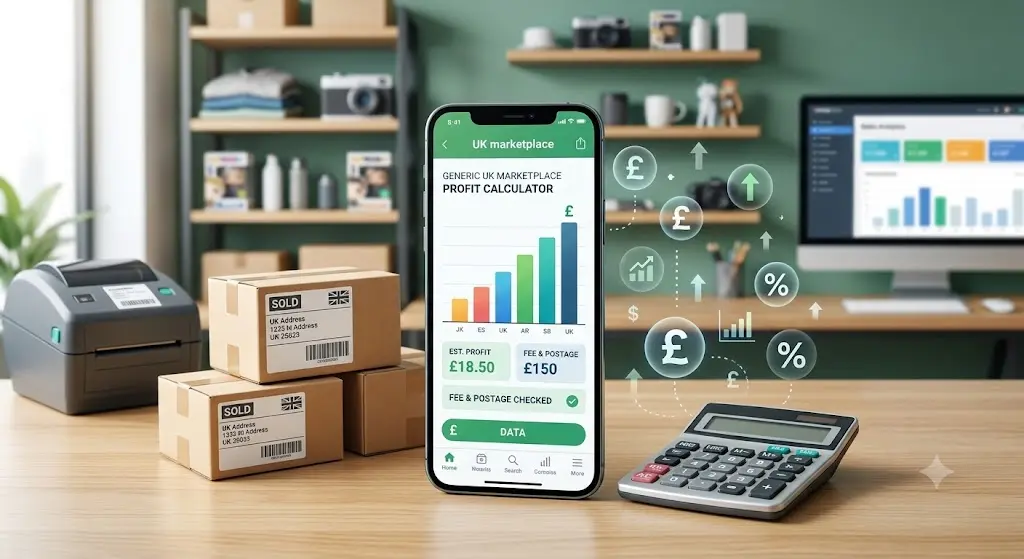
Want to see real profit before you start? 💡 Use our Free Profit Calculator
What This Guide Covers:
- How to start reselling with very little money
- Where successful resellers find profitable products
- Which platforms are best for selling online
- How to create listings that actually sell
- How to handle shipping and delivery efficiently
- How to grow your side hustle into a real business
By the end of this guide, you’ll understand exactly how to start your own £50-to-£500 reselling stack.
Quick Start Checklist: How Should You Price Items for Reselling?
If you want to begin today, follow this simple checklist:
- [ ] Check sold listings to find the real market value
- [ ] Factor in fees, shipping, packaging, and profit margin
- [ ] Use competitive pricing for common items
- [ ] Use premium pricing for rare items
- [ ] Price slightly higher to allow offers
Before listing, calculate your profit using our Fee & Profit Calculator.
SS Pro Tip: Start with What You Own Many successful resellers started exactly this way — by selling items they already owned. Once you make your first sale, you reinvest that money into more inventory and gradually grow your stack.
1. The “Sold Listings” Rule (Most Important Step)
Never price your item based on what sellers are asking. Always look at what buyers are actually paying.
- Search for your item on eBay or Vinted.
- Apply the “Sold Items” filter in the search settings.
- Check closing prices from the last 30–90 days.
This process strips away wishful thinking and shows you the true market value.
2. Competitive vs. Premium Pricing
Not all products should be priced the same way. Your strategy depends entirely on market supply.
Competitive Pricing (Fast Sales)
- When to use: Selling common items with high competition.
- Strategy: Price within 5–10% of the lowest active listing.
- Goal: Focus on quick turnover and volume rather than maximum margin per item. Ideal for everyday products.
Premium Pricing (Higher Profit)
- When to use: Unique, vintage, or niche items.
- Strategy: Price at the higher end of the sold spectrum.
- Goal: Wait for the right buyer who values rarity. There is limited competition, so buyers are willing to wait and pay more. This is known as “long-tail selling”.
3. Always Price for Profit (Not Just Sales)
Many beginners make the mistake of pricing based only on what others charge — without calculating expenses. Before listing, you must consider:
- Purchase cost of the item
- Marketplace fees (typically ~10–15%)
- Shipping cost
- Packaging materials (mailing bags, bubble wrap, tape)
The Math in Action:
- Item sold for: £30.00
- eBay fee (13%): £3.90
- Postage cost: £3.00
- Packaging (poly envelope & tape): £0.50
- Item original cost: £10.00
- Final Net Profit: £12.60
Avoid unexpected losses by checking your math instantly with our Shipping Cost Calculator.
4. Pricing Psychology (Why £19.99 Works Better Than £20)
Even in 2026, pricing psychology plays a massive role in buyer decisions.
- The Left-Digit Effect: £19.99 feels like £19, placing it in an entirely lower price bracket in the buyer’s mind than £20.
- Increased Conversions: Prices ending in .95 or .99 historically convert better because buyers perceive they are getting a deal or a discounted price.
- This technique is called “charm pricing”.
SS Pro Tip: Find the Sweet Spot If multiple items have been sold recently at the exact same price, that is your data-backed, ideal target pricing range.
5. Using “Best Offer” to Increase Sales
Many UK buyers love to negotiate, especially on platforms like eBay and Vinted.
- Price your item 10–15% above your actual target profit price.
- Enable the “Best Offer” feature on your listing.
- Accept reasonable offers quickly to build momentum.
SS Pro Tip: Automate the Grind Set an auto-decline threshold slightly below your absolute lowest acceptable price. This instantly filters out lowball offers, protects your margins, and saves you time.
6. Advanced Pricing Strategy: Dynamic Marking & Repricing (2026)
As you scale your reselling stack, advanced pricing keeps your inventory moving:
- Stale Stock Markdowns: Implement a clear markdown schedule. If a competitive item hasn’t sold in 30 days, drop the price by 10% or run a promoted markdown sale.
- Seasonal Sourcing Shifts: Use tools like Google Trends to adjust pricing dynamically. Price winter coats at a premium in October, but switch to aggressive, competitive pricing to clear them by February.
- Multi-Channel Consistency: If cross-listing across multiple apps, make sure your pricing accounts for the structural fee differences between platforms so your take-home profit remains uniform.
SS Pro Tip: Track Every Sale From Day One Even if your total sales are currently below the UK’s £1,000 Trading Allowance threshold (meaning you don’t yet need to report it to HMRC), you should still track your numbers. Create a simple spreadsheet to document: purchase cost, sale price, marketplace fees, packaging, and postage.
Want to see your break-even point before you source stock? 📊 Use our Break-Even Calculator.
Common Pricing Mistakes to Avoid
- ❌ Pricing based on active, unsold listings instead of historical sold data.
- ❌ Forgetting to subtract fees, packaging, and postage costs before calculating profit.
- ❌ Undercutting the market too aggressively and triggering a race to the bottom.
- ❌ Overpricing low-demand items and letting inventory take up valuable physical storage space.
Essential Tools for Resellers
- Profit Calculators: Estimate platform fees and net margins instantly before buying stock.
- Price Research Tools: Monitor platform demand via filtered marketplace historical sales.
- Inventory Tracking: A simple, reliable spreadsheet to log your growing inventory stack.
- Shipping Hardware: Dedicated thermal label printers (like Munbyn or Dymo) to save massive amounts of time and packaging tape as you scale up your delivery dispatch.
Key Takeaways:
- Always use sold listings to determine price
- Factor in fees, shipping, and costs
- Use competitive pricing for common items
- Use premium pricing for rare items
- Charm pricing increases conversions
- Use “Best Offer” strategically
Free Marketplace Calculators
Ensure your items are priced safely for consistent profitability before you click publish.
Frequently Asked Questions
Do you need a business to start reselling in the UK?
No, you can start as a casual seller disposing of personal belongings. However, if you are buying or making items specifically to sell for a profit, HMRC classifies this activity as trading. In the UK, you can earn up to £1,000 per tax year tax-free under the Trading Allowance. Once your total gross sales pass this £1,000 threshold, you must register as a Sole Trader with HMRC. Note that modern platforms like eBay and Vinted now automatically report sales volumes to HMRC once you cross specific platform triggers.
How much money do you need to start reselling?
You can start with £0. Many beginners start by finding unneeded items around their homes, selling them, and then explicitly reinvesting that initial revenue into sourcing their first targeted wholesale or retail clearance items.
Which platform is best for beginners?
Vinted and eBay are the strongest options for UK beginners. Vinted is incredibly user-friendly for clothing and features no selling fees for the seller, while eBay offers an unparalleled global buyer footprint across almost every category imaginable.
Related Reselling Guides
- 🗺️ How to Sell on eBay UK: Complete Beginner Guide – The complete roadmap for setting up a tax-compliant business account from scratch.
- 💸 How Much Does eBay Take Per Sale in the UK? – A transparent breakdown of final value fees, listing costs, and the “hidden” charges that affect your bottom line.
- 📈 Best Items to Sell on eBay for Profit – Our data-backed list of high-margin items trending in the UK right now.
- ⚖️ eBay vs Amazon: Which Platform Is Better for Sellers? – An honest head-to-head comparison to help you decide which marketplace deserves your inventory and your time.