One of the most persistent myths in the UK reselling community is that you need a massive cash bankroll to build a profitable business.
In reality, thousands of successful independent sellers began their journey with nothing more than a spare afternoon, a smartphone, and a pile of unneeded items clearing out of their loft.
In 2026, your startup capital requirements depend entirely on your long-term goals. This guide breaks down the realistic cost brackets to launch your reselling business in the UK—moving from a £0 risk-free test up to a professional, scalable operation.
Affiliate Disclosure: This post contains affiliate links. If you click through these links and make a purchase or sign up for a service, we may earn a small commission at no additional cost to you. We only recommend tools and services that we have personally vetted, tested, and believe will genuinely help you scale your reselling business. As an Amazon Associate, we earn from qualifying purchases.
Quick Answer: What is the True Cost to Start Reselling?
- £0 (Risk-Free): Best for absolute beginners. Start immediately by decluttering and selling personal items you already own.
- £50 (The Side Hustle): Best for learning the market. Fund your first local sourcing trips to Car Boot Sales and thrift shops.
- £250+ (The Pro Track): Best for rapid scaling. Invest in specialised workflow tools and higher-margin bulk inventory.
Most long-term sellers recommend starting with £0 to £50 to learn the platform mechanics before risking significant personal capital.
1. The “Zero Pound” Launch (£0 Startup Capital)
This is the safest and most practical way to learn how to flip products online without risking a single penny of your savings.
- The Strategy: High-intensity household decluttering.
- The Goal: Generate an initial £100 to £200 in pure seed money to fund future sourcing.
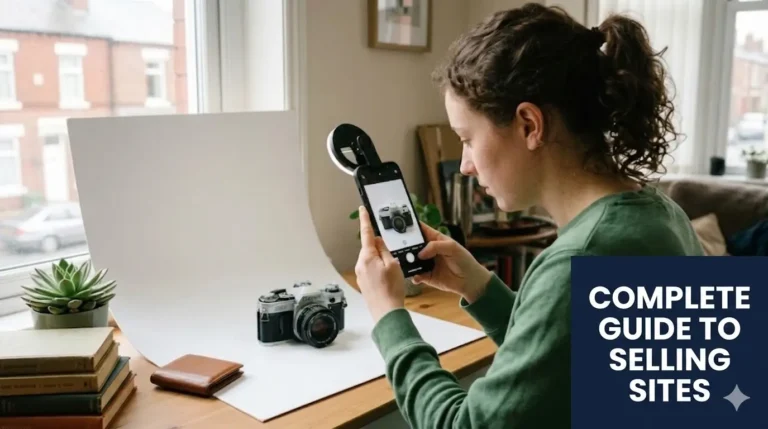
- What You Need: A standard smartphone camera, natural daylight, and recycled delivery boxes.
- The Ideal Platform: Vinted UK is perfect here because it charges sellers £0 in fees, allowing you to keep 100% of your asking price.
High-Velocity Household Items to Look For:
- Branded streetwear and vintage coats
- Outgrown children’s clothing bundles
- Retro video games, controllers, and working consoles
- Unused small household electronics or graphing calculators
This method allows you to master photography, listing SEO, and shipping logistics completely free of risk. 👉 Deep Dive Blueprint: How to Start Reselling Online: The Ultimate UK Beginner’s Guide
2. The “Side Hustle” Launch (£50 Startup Capital)
With just a single £50 note, you can transition from a household declutterer into an active retail sourcer buying inventory specifically for profit.
- The Strategy: The weekend Car Boot Sale sweep or charity shop run.
- The Sourcing Budget: Allocate £40 toward stock (aiming to purchase 20 items at an average cost of £1 to £2 each).
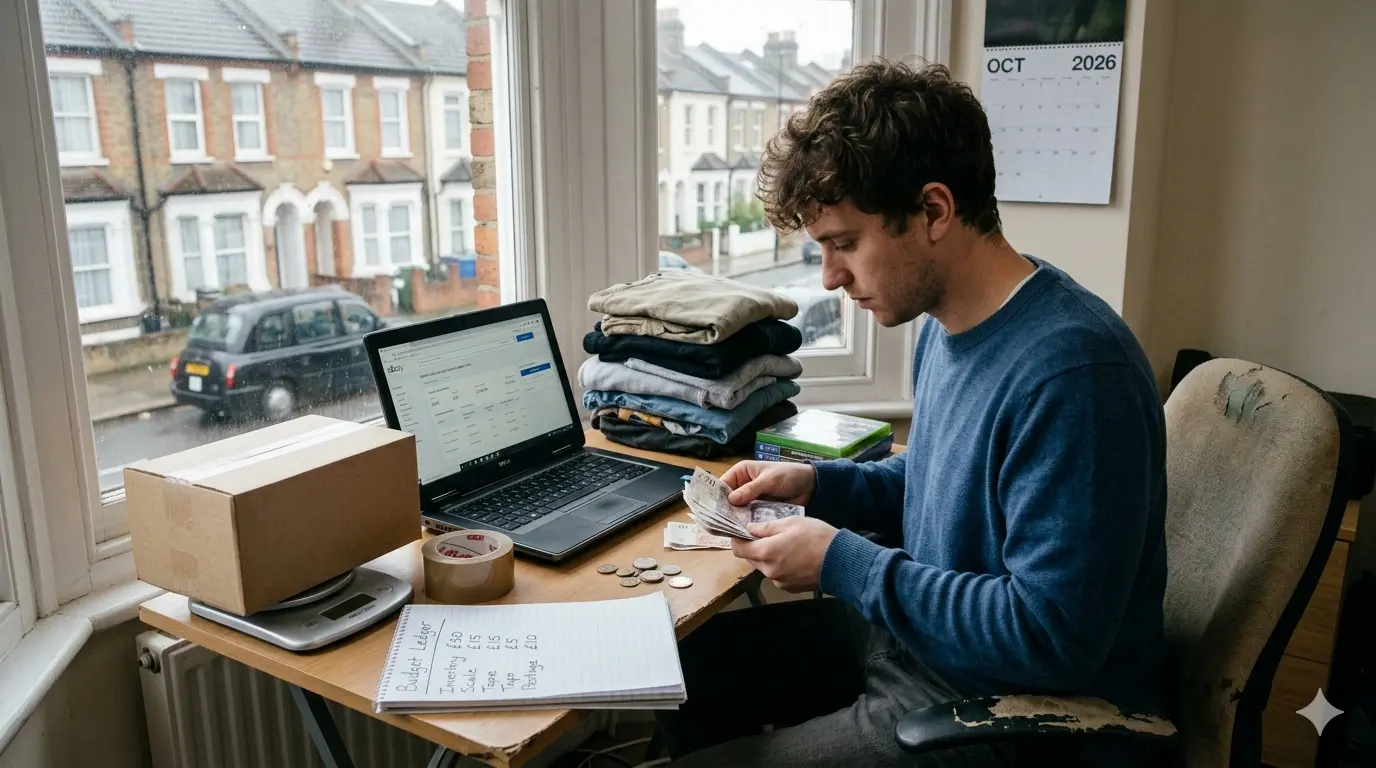
- The Supplies Budget: Allocate £10 toward basic packaging, such as a bulk pack of tough SR Mailing Recycled Poly Mailers and high-tack packing tape.
The Profit Projections:
If you purchase 20 items for £2 each and flip them online for a conservative average of £12 each, your store generates £240 in gross revenue. After accounting for basic shipping variables and platform structures, you are left with a highly lucrative cash pile ready to pump right back into your next inventory run. 👉 Read Next: The Ultimate UK Sourcing Guide: Where to Find Profitable Stock
3. The “Pro Track” Launch (£250+ Startup Capital)
If you already understand online selling and want to treat reselling like an efficient, high-volume business from day one, this tier builds your infrastructure.
The Budget Breakdown:
- £150 Inventory Fund: Focused on sourcing premium, higher-margin designer garments, technical outerwear, or niche electronic goods.
- £100 Workflow Automation: Stop wasting time cutting out paper labels with scissors. Streamline your dispatch speeds by investing in basic infrastructure:
- A high-speed Thermal Label Printer to print self-adhesive postage labels instantly without ink.
- An Accuteck ShipPro Digital Shipping Scale to weigh packages precisely and avoid expensive courier penalties.
The Professional Advantage:
By equipping your workspace properly from the beginning, you lower your average processing time per order, minimise listing friction, eliminate shipping weight errors, and position your brand to scale seamlessly into a volume operation.
The Hidden Capital Drains Beginners Forget
Even when keeping your initial footprint small, ensure you account for these minor operating expenses so they don’t quietly erode your net cash reserves:
- Transport & Fuel Costs: Driving between multiple weekend Car Boot Sales or making daily trips to courier ParcelShops consumes fuel. Consolidate your drop-off trips to protect your margins.
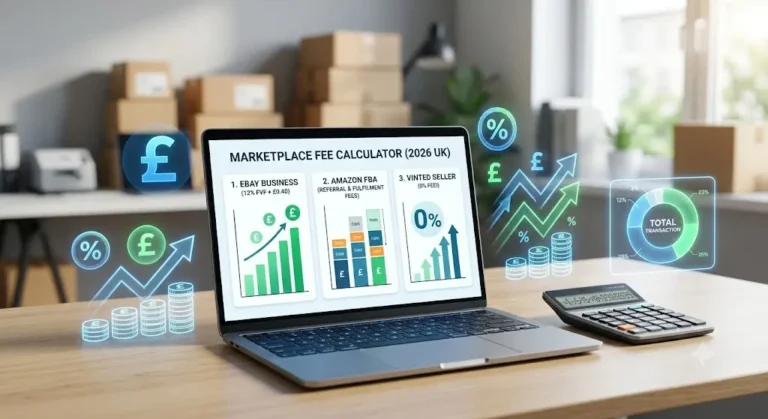
- Hidden Transactional Variables: Unless you are selling exclusively on Vinted, assume marketplaces will take a chunk of your gross sales. On business accounts, expect platform costs to average roughly 12% to 15%. 👉 Free Optimisation Tool: Calculate Your Exact Net Returns with Our Fee & Profit Calculator
The Smart Scaling Strategy: Start Small, Reinvest Fast
The goal of e-commerce reselling isn’t to make a massive upfront financial investment—it’s to build compounding momentum.
[Start with £50 Capital] ➡️ [Flip for £200 Revenue] ➡️ [Reinvest £150 into Bulk Stock] ➡️ [Scale to £600 Revenue]
By following this compounding cycle, you grow your operation organically using the platform’s own money rather than exposing your personal bank account to risk.
SS Pro Tip: The 30-Flip rule Sourcing and pricing items effectively is an acquired skill. Do not risk large sums of capital on wholesale lots or liquidation pallets until you have successfully sourced, listed, and flipped at least 30 to 50 individual items manually. Experience is your best protection against bad buys.
Check Your Margins Before You Source
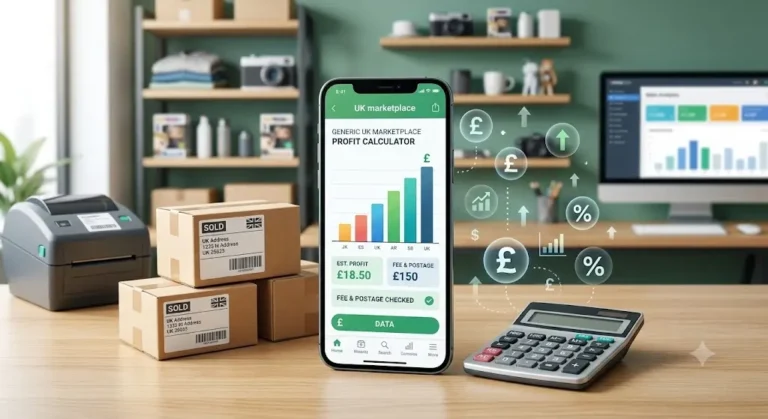
Never guess your net profit numbers at a checkout counter. Use our free, updated UK web calculators to verify your margins instantly:
- 🧮 Free UK Marketplace Profit Calculator
- 📉 Free Break-Even Price Calculator
- 📦 The Ultimate Shipping Guide for UK Online Sellers
Frequently Asked Questions
Do I need to buy expensive camera gear to make sales?
No, absolutely not. In 2026, smartphone cameras are advanced enough to capture crisp, professional-grade e-commerce product photos. Your money is far better spent on inventory; simply utilise clean, natural window daylight and a plain background to make your listings pop.
Can I run a profitable reselling business using only free packaging?
Yes, especially when you are in the beginner or intermediate stages. Safely saving and reusing clean cardboard boxes, bubble wrap, and paper void-fill from your own online household deliveries is a fantastic way to keep your operating costs at zero while appealing directly to eco-conscious UK buyers.
How much money can a beginner expect to make in their first month?
Your initial returns depend entirely on your listing consistency and stock demand. A beginner starting with £0 by clearing out their home can realistically expect to generate £100 to £300 within their first 30 days, provided they price items accurately using recent marketplace sold history data.