SELLERSTACK MARKETPLACE COMPARISON · UPDATED FOR 2026
eBay vs Depop vs Vinted UK: Which Is Best for Resellers?
Compare seller costs, buyer pricing, product fit, shipping, payouts, returns and operational workload before deciding where your resale stock belongs.
UK Reseller Marketplace Comparison
Marketplace fees, buyer charges, shipping programmes, seller protections and account rules can change. This guide compares the current UK position while focusing on the wider decisions that determine whether a platform is suitable for a particular item.
Last reviewed: October 2026
eBay, Depop or Vinted: Which Is Best for UK Resellers?
There is no single winner.
| If Your Priority Is… | Strong Starting Point |
|---|---|
| Broad product range and large marketplace flexibility | eBay |
| Vintage, streetwear and style-led fashion | Depop |
| Low standard seller fees on second-hand stock | Vinted |
| Selling beyond clothing and fashion | eBay |
| Fashion discovery and presentation-led listings | Depop |
| Simple integrated shipping for suitable items | Vinted |
The strongest platform is the one that gives your particular product the best combination of achievable selling price, demand, costs, selling speed, workload and risk.
Selling Your Own Clothes and Running a Resale Operation Are Different Decisions
If you simply want to clear unwanted clothes from your wardrobe, marketplace choice can stay relatively simple.
A reseller buying stock specifically to sell needs to consider more: account type, fees, buyer checkout cost, stock investment, payout timing, returns, fulfilment workload and how easily the business can manage inventory across channels.
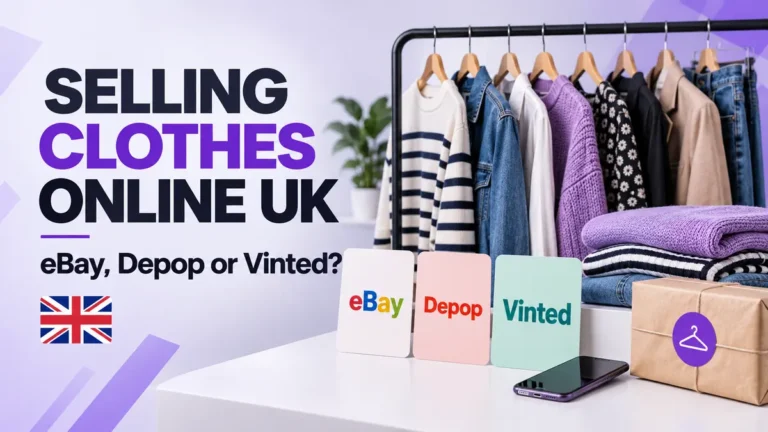
If you are completely new and primarily deciding where to sell unwanted clothing, start with our beginner comparison of selling clothes on eBay, Depop and Vinted .
The SellerStack Marketplace Decision Framework
Comparing marketplaces only by headline seller fees produces poor decisions.
SellerStack recommends comparing seven areas before choosing where an item belongs.
Achievable Selling Price
What do genuinely comparable items sell for on this specific marketplace?
Buyer Demand
Does the platform have active buyers looking for this product, brand, style or category?
Seller Costs
Include transaction fees, processing, advertising, packaging, postage and optional marketplace services.
Buyer Checkout Cost
Buyer-side marketplace fees and delivery costs can affect what someone is willing to offer for the item itself.
Selling Speed
A higher selling price may not be better if the stock remains unsold for substantially longer.
Operational Effort
Consider listing time, offers, messages, packaging, label creation, inventory control and customer service.
Risk
Returns, authenticity, loss, damage, account requirements and buyer disputes all affect the real value of the sale.
Lowest Seller Fee Does Not Automatically Mean Highest Profit
If Platform A charges £4 more in seller fees but consistently produces a £15 higher selling price for your stock, Platform A may still leave you better off.
Compare the final outcome—not one line of the transaction.
eBay vs Depop vs Vinted UK: Quick Comparison
| Area | eBay | Depop | Vinted |
|---|---|---|---|
| Marketplace Breadth | Very broad | Fashion-led | Second-hand led, increasingly broad |
| Standard UK Seller Fee | Depends on private vs business seller | No standard selling fee | No standard listing or selling fee |
| Payment / Transaction Cost | Included within business final value fee structure | 2.9% + 30p payment processing | No standard seller transaction fee |
| Optional Promotion | Promoted Listings | Boosted Listings | Bumps / promotional features |
| Buyer-Side Marketplace Charge | Applies to eligible UK private-seller listings | Marketplace fee applies to UK buyers | Mandatory Buyer Protection |
| Business / Commercial Selling | Business account required where applicable | Commercial obligations still apply | Commercial selling requires Pro where applicable |
| Strong Use Case | Broad resale inventory | Fashion and style-led stock | Second-hand and price-sensitive inventory |
First: Make Sure You Are Comparing the Correct Seller Type
This matters more than many marketplace comparison articles suggest.
If you deliberately buy products to resell for profit, you should not compare the fee-free economics of casual private selling with the costs of running a genuine resale business.
eBay
eBay states that sellers who buy items to resell, make items to sell or otherwise operate as a business need to register as business sellers.
Vinted
Vinted states that repeated commercial selling is permitted only through Pro where the programme applies. Ordinary accounts can be restricted for commercial activity.
Depop
Depop does not use the same private-versus-business fee split as eBay, but professional sellers still remain responsible for the legal, consumer and tax obligations that apply to their activity.
A deliberate reseller should compare the platform structures that actually apply to a commercial selling operation rather than assuming every fee-free private-sale feature is available to a resale business.
eBay: Best When Marketplace Breadth and Product Range Matter
eBay is the least narrowly defined of the three marketplaces.
A reseller can operate across clothing, footwear, electronics, collectables, tools, replacement parts, home products, cameras, gaming and many other categories from one seller account.
That makes eBay particularly useful when your inventory is mixed rather than concentrated entirely around fashion.
eBay Strengths
- Broad product coverage
- Detailed category structure
- Item specifics and product identifiers
- Seller Hub tools
- Product Research data
- Auctions and fixed-price listings
- Strong fit for specialist products
eBay Trade-Offs
- Business seller fees vary by category
- Listing setup can be more detailed
- Advertising can add cost
- Seller-performance metrics matter
- Returns and customer-service workload can be greater
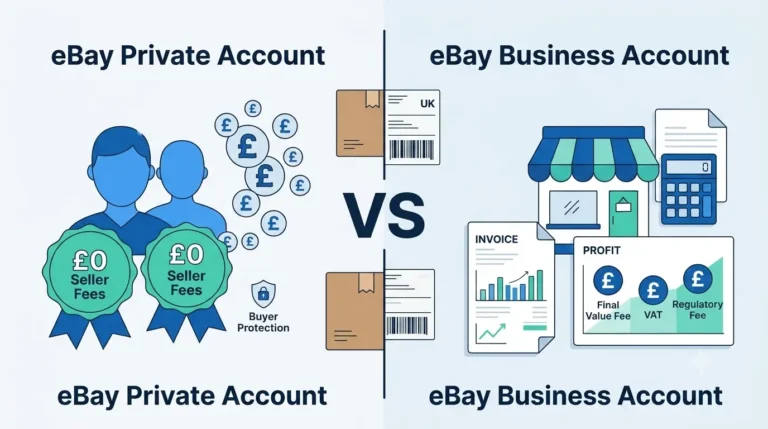
Private vs Business Economics
UK private selling is currently free for most ordinary domestic categories, subject to eBay’s listing allowance and exceptions.
Business sellers use a different structure containing category-based final value fees, a per-order fee and the Regulatory Operating Fee.
That distinction is critical when calculating the profitability of stock bought specifically for resale.
Selling Seriously on eBay?
Our full eBay guide covers seller type, sourcing, product research, pricing, listings, fees, advertising and fulfilment.
Depop: Best When Product Style and Fashion Presentation Matter
Depop is much more concentrated around fashion than eBay.
That can make it attractive for products where style, era, aesthetic, fit and visual presentation form an important part of the buying decision.
Vintage clothing, streetwear, distinctive branded fashion and visually strong pieces are sensible categories to test.
Depop Strengths
- Strong fashion orientation
- No standard UK Depop selling fee
- Offers and messaging built into the buying process
- Visual presentation can differentiate stock
- Depop Shipping available for UK sellers
Depop Trade-Offs
- 2.9% + 30p UK payment-processing fee
- Buyer Marketplace fee affects checkout total
- Boosted Listings can materially reduce margin
- Less suitable for many non-fashion categories
- Presentation can require more creative effort
Depop Boosted Listings Need a Profit Check
For relevant new UK listings from 23 March 2026, Depop’s current Boosted Listing fee is 12% when a qualifying boosted interaction is attributed to the eventual sale.
That is large enough to change whether an item remains worth selling at a particular price.
Compare the additional exposure with your remaining profit. A higher sale probability is not useful if the advertising cost removes too much of the margin.
Depop Protection
Eligible UK sellers using a Depop Shipping label can receive protection when qualifying parcels are lost or damaged in transit.
The current seller-protection limit is up to £250 per transaction, subject to Depop’s eligibility requirements.
Build a Better Depop Workflow
Learn how Depop listings, fees, shipping, sourcing and pricing work together before committing stock to the platform.
Vinted: Best When Low Seller Costs and Simple Transaction Flow Matter
Vinted’s standard seller model is unusual because the seller does not normally pay a fee to upload or sell an item.
Instead, Buyer Protection is added to the buyer’s order.
That can make seller-side profit calculations look very attractive, particularly on lower-value stock—but the buyer’s complete checkout price still matters when deciding how high you can realistically price the item.
Vinted Strengths
- No standard listing fee
- No standard seller transaction fee
- Integrated shipping options
- Buyer Protection built into transactions
- Bundles and offers are easy for buyers to use
- Strong fit for second-hand stock
Vinted Trade-Offs
- Buyer Protection raises buyer checkout price
- Commercial sellers need the correct Pro setup
- Pro sellers face different return obligations
- Lower-priced stock can attract aggressive offers
- Platform fit varies significantly by category
Vinted Pro Changes the Operational Picture
A reseller operating commercially should pay particular attention to Vinted Pro rather than assuming the ordinary member experience applies unchanged.
Pro transactions currently include a 14-day buyer withdrawal period.
Vinted states that a Pro order is not automatically completed until 14 days after receipt unless the transaction is otherwise resolved.
That affects cash-flow timing and returns exposure even when the headline seller fee remains attractive.
Integrated Shipping Protection
Standard and Pro sellers using Vinted-generated integrated labels can currently receive compensation for confirmed lost or damaged parcels, subject to carrier and programme terms.
Vinted states that the general compensation limit can be up to £500.
Understand Vinted Before Scaling Inventory
Our full guide covers account type, Vinted Pro, listings, pricing, shipping, offers, sourcing and seller records.
Seller Fees Compared: Why the Headline Number Is Not Enough
The three platforms currently use very different ways of generating revenue from a transaction.
| Cost Area | eBay Business | Depop UK | Vinted |
|---|---|---|---|
| Standard Seller Transaction Cost | Category-dependent | 2.9% + 30p processing | No standard seller fee |
| Fixed Order Charge | 30p / 40p in standard business structure | 30p included in processing structure | None as standard seller fee |
| Regulatory Fee | 0.35% | Not a separate standard seller charge | Not a separate standard seller charge |
| Optional Promotion | Promoted Listings | 12% Boosting when attributed | Optional promotional features |
Do not compare eBay business fees with eBay’s fee-free private selling structure if you are actually buying stock to resell.
Compare the seller structure that applies to your real activity.
Worked Example: The Same £30 Item
Suppose an item sells for £30.
To isolate marketplace seller charges, this simplified comparison looks only at the item price. Postage, stock cost, packaging and tax are deliberately excluded because fulfilment arrangements differ.
| Platform | Illustrative Seller Charge | Before Other Costs |
|---|---|---|
| eBay Business — Clothing | 11.9% FVF + 40p order fee + 0.35% regulatory fee, plus applicable VAT on eBay service fees | Highest seller-side cost in this example |
| Depop — Not Boosted | 2.9% + 30p payment processing | Lower seller-side cost |
| Depop — Boosted & Attributed | Processing fee + 12% Boosted Listing charge | Materially higher cost |
| Vinted | No standard listing or selling fee | Highest seller-side retention before own costs |
The seller-fee result tells us nothing about whether the same item will achieve £30 on each marketplace.
It also does not capture buyer-side fees, delivery cost, selling speed or return risk.
Those factors are why platform selection requires more than fee comparison.
Buyer Checkout Cost Can Affect Your Achievable Selling Price
Resellers naturally focus on what the marketplace deducts from the seller.
Buyers care about the amount they actually pay.
eBay
UK private-seller listings currently include an eBay Buyer Protection fee paid by the buyer.
For business-seller listings, Buyer Protection is currently included without an additional buyer fee.
Depop
UK buyers currently pay a Marketplace fee of up to 5% of the item price plus up to £1, excluding shipping and taxes.
Vinted
Buyer Protection is mandatory and added automatically to eligible purchases.
Think About the Buyer’s Total, Not Just Your Listing Price
A £30 listing can look meaningfully more expensive once buyer fees and shipping are added.
This can influence offers, conversion and the maximum item price the marketplace can support.
Compare the Same Product Across Marketplaces
Enter the same product figures and compare estimated fees, profit, margin and ROI before deciding where to list.
Which Products Fit Each Marketplace Best?
Treat the following as starting points for research rather than rigid rules.
| Stock Type | Platform to Research First | Why |
|---|---|---|
| Everyday second-hand clothing | Vinted | Low seller-fee structure and simple resale workflow |
| Vintage / Y2K / style-led fashion | Depop | Fashion-focused marketplace and visual discovery |
| Collectables | eBay | Broader specialist-category coverage |
| Electronics | eBay | Detailed model/category structure and broad buyer base |
| Designer fashion | Compare all three | Selling price, authenticity programmes and buyer audience can vary substantially |
| Streetwear | Depop + eBay | Different buyer pools can support different pricing |
| Low-value fashion bundles | Vinted | Bundles and low seller costs can improve practicality |
| Replacement parts / specialist items | eBay | Exact-model and long-tail search behaviour |
Do not route stock purely by category.
Research the exact brand, model, size, style and condition on each marketplace before assuming one platform will perform better.
Shipping & Seller Protection Compared
eBay
Shipping depends strongly on seller type.
Simple Delivery is now the required method for most eligible listings from UK private sellers, while business sellers retain broader fulfilment workflows.
Depop
UK sellers can use Depop Shipping. Eligible transactions sent using the correct Depop label can qualify for seller protection against confirmed loss or damage, currently up to £250.
Vinted
Vinted provides integrated shipping labels across supported carriers. Sellers using Vinted-generated labels can qualify for compensation under the applicable carrier and Vinted terms.
Integrated labels reduce manual postage work, but the best shipping system is still the one that fits your parcel sizes, values, dispatch routine and risk.
Returns & Buyer Disputes: Where the Platforms Differ
Returns matter because a platform can look highly profitable until return rates and seller time are included.
eBay Business Sellers
UK business sellers have consumer-law obligations and need clear return policies. eBay also provides additional seller protections for eligible Above Standard and Top Rated business sellers.
Depop
Depop Protection can cover qualifying buyers when an item does not arrive, arrives damaged or is significantly not as described. Sellers should keep transactions and communication on-platform and comply with the relevant shipping requirements.
Vinted
Standard Vinted transactions generally give the buyer a short period after delivery to report a problem before funds are released.
Vinted Pro is different: buyers have a 14-day right of withdrawal on qualifying purchases, which creates a materially different returns environment for commercial sellers.
Payout Timing & Cash Flow
Resellers often compare profit per sale while ignoring how long the money remains unavailable.
eBay
Payout timing depends on seller status, account history and whether funds are being held because of delivery, disputes or account reviews.
Depop
For UK Depop Shipping orders, Depop currently sends payment two business days after delivery or 10 business days after the sale, whichever comes first, subject to account conditions.
Vinted
Standard transactions normally complete when the buyer confirms everything is OK or after the applicable post-delivery window.
Pro orders operate on the longer 14-day withdrawal timetable.
£500 of profit locked behind slow-selling inventory and delayed payouts can be less useful than a smaller margin that cycles through your stock budget quickly.
Offers & Negotiation
All three marketplaces allow some form of buyer negotiation, but you should not automatically add an arbitrary 10% or 20% to every listing simply because offers exist.
Instead, define three numbers:
1. Target Price
The realistic amount you believe the market can support.
2. Acceptable Offer
A lower price that still produces sufficient profit and ROI.
3. Walk-Away Price
The minimum below which selling the item is no longer worth the return on your stock and time.
Work Backwards From the Profit You Need
Use SellerStack’s pricing calculator to estimate a selling price that covers costs and leaves your desired return.
Should You Cross-List on eBay, Depop and Vinted?
Cross-listing can be useful when an item has plausible demand on more than one marketplace.
It gives the stock more opportunities to reach a suitable buyer without forcing you to predict the winner in advance.
But cross-listing creates an inventory-control problem: the item can only be sold once.
Cross-Listing Makes More Sense When…
- The item fits multiple marketplaces
- You can manage stock accurately
- The item is relatively slow moving
- You have a clear delisting process
- The potential selling price differs between platforms
Be Careful When…
- You list hundreds of unique one-off items
- Several people manage the inventory
- You cannot delist immediately after a sale
- Third-party automation is not officially supported
- Order volume makes manual stock control unreliable
Before connecting third-party listing or automation software, verify the marketplace’s current integration rules and available permissions. Do not assume a tool is officially supported simply because it can technically interact with a marketplace.
The SellerStack 30-Day Marketplace Test
Instead of arguing theoretically about which marketplace is best, collect evidence from your own inventory.
1. Choose Comparable Stock
Select a manageable group of products that genuinely fit more than one of the marketplaces.
2. Research Each Marketplace Separately
Do not copy the same price blindly. Check comparable listings, sold evidence where available and the buyer’s likely checkout cost.
3. Record Your Starting Figures
Track listing price, minimum acceptable offer, stock cost, estimated fees and your target profit.
4. Track Buyer Response
Record views where available, saves, likes, watchers, messages and offers.
5. Record the Final Sale
Capture the sale price, marketplace cost, fulfilment cost, days to sale and actual profit.
6. Measure Workload
Note how much time each marketplace requires for listing, questions, offers, packing, postage and after-sales support.
7. Review After 30 Days
Look for repeatable patterns instead of declaring a winner from one lucky sale.
Metrics Worth Tracking
| Metric | What It Tells You |
|---|---|
| Average Selling Price | Which platform supports stronger realised prices |
| Days to Sale | How quickly inventory becomes cash |
| Net Profit | What actually remains after selling costs |
| ROI | How efficiently stock capital performs |
| Offer Rate | How much negotiation the marketplace creates |
| Return / Issue Rate | Operational risk and after-sales workload |
| Time per Sale | Whether additional profit justifies additional work |
Model the Numbers Before Choosing
eBay Fee & Profit Calculator
Estimate seller fees, advertising, profit, margin and ROI.
Depop Fee & Profit Calculator
Model payment processing, Boosted Listings and your wider selling costs.
Vinted Profit Calculator
Check stock cost, packaging, optional promotion, profit, margin and ROI.
SellerStack Decision Matrix
| Your Situation | Start With |
|---|---|
| You sell a broad mix of products | eBay |
| Your stock is mainly vintage / streetwear / style-led fashion | Depop |
| Your priority is reducing standard seller-side transaction fees | Vinted |
| You sell specialist or long-tail products | eBay |
| You rely heavily on visual fashion presentation | Depop |
| You sell inexpensive everyday second-hand fashion | Vinted |
| You have high-value branded fashion | Research all three |
| You are unsure | Run a controlled cross-platform test |
Common Marketplace-Choice Mistakes
1. Choosing Only by Seller Fee
Lower fees do not guarantee a higher selling price or faster sale.
2. Comparing a Private Account With a Business Operation
Use the seller structure that actually applies to how you trade.
3. Ignoring Buyer Fees
The buyer’s total checkout cost can affect offers and conversion.
4. Assuming One Marketplace Is Best for a Whole Category
Brand, size, condition, style and item value can change the answer.
5. Boosting Without Checking Margin
Paid promotion can turn an attractive sale into a weak one.
6. Ignoring Selling Speed
Higher theoretical profit is less useful if capital remains trapped for months.
7. Cross-Listing Without Inventory Control
Selling the same one-off item twice creates cancellations and buyer problems.
8. Copying One Listing Across Every Marketplace
Titles, descriptions, categories and buyer expectations differ.
9. Ignoring Returns and Payout Timing
Margin alone does not describe the operational economics of a marketplace.
10. Making Decisions From One Sale
Build a sample large enough to identify patterns before changing your entire selling strategy.
Marketplace Reporting and Tax Are Separate From Marketplace Fees
eBay, Depop and Vinted may collect and report seller information under applicable digital-platform reporting rules.
That does not mean every reported sale is automatically taxable.
Selling your own unwanted possessions is different from deliberately buying stock to resell for profit.
Keep records of purchases, sales and costs if your activity moves beyond casual selling.
Understand the Business Side of Reselling
Explore UK guidance on seller records, HMRC, trading income and business responsibilities.
eBay vs Depop vs Vinted UK: FAQs
Which is cheapest for UK sellers: eBay, Depop or Vinted?
Vinted currently has no standard seller listing or transaction fee. Depop UK has no standard selling commission but charges payment processing, while eBay business sellers pay category-based fees. However, lowest seller cost does not automatically produce the highest profit.
Is Depop free to sell on in the UK?
Depop currently charges no standard UK selling fee, but sellers pay a 2.9% + 30p Depop Payments processing fee. Optional Boosted Listings can add a further charge when Depop attributes the sale to a boosted interaction.
Does Vinted charge sellers?
Vinted currently states that sellers do not pay a standard fee to upload or sell items. Buyers pay mandatory Buyer Protection. Optional seller services and the rules for Pro accounts should still be checked separately.
Is eBay free for private sellers?
UK-based private sellers currently pay no standard final value fee or Regulatory Operating Fee on most eligible domestic sales, subject to eBay’s listing allowance and exceptions. Sellers buying stock to resell should use the business seller structure where required.
Which marketplace is best for vintage clothing?
Depop is a strong platform to research because of its fashion-led positioning, but eBay and Vinted can also produce viable sales. Compare comparable listings, prices, demand and costs for the exact product rather than relying on the category alone.
Which marketplace is best for everyday clothes?
Vinted is often a sensible starting point because of its second-hand focus and low standard seller cost. Depop and eBay may still perform better for particular brands, styles or higher-value pieces.
Can I sell on all three marketplaces at the same time?
You can list suitable stock across multiple marketplaces, provided you comply with each platform’s rules and maintain accurate inventory. Remove one-off stock immediately from the other marketplaces once it sells.
Is cross-listing worth it?
It can be useful for stock with plausible demand across several platforms, particularly when you are testing market fit. The benefit decreases if the additional listing work and inventory-management risk outweigh the extra sales opportunity.
Which marketplace pays sellers fastest?
There is no permanent single answer because payout timing depends on seller type, delivery confirmation, disputes and account status. Vinted Pro in particular operates with a longer completion period because buyers have a 14-day withdrawal right.
Which platform makes the most profit?
It depends on the product. Compare achievable selling price, marketplace fees, buyer checkout cost, stock cost, fulfilment, selling speed, returns and workload. A platform with higher fees can still produce more profit if it supports a sufficiently higher selling price.
Do Not Choose a Marketplace. Choose a Marketplace for the Stock.
eBay, Depop and Vinted solve different selling problems.
eBay offers the broadest category coverage and is particularly useful for mixed inventory and specialist products.
Depop deserves serious consideration when fashion identity, presentation and style-led discovery matter.
Vinted’s low standard seller-cost model can make it highly attractive for second-hand stock, but buyer checkout cost, commercial-account rules and Pro return requirements still need to be understood.
For many serious resellers, the strongest answer will not be to choose one marketplace permanently.
Build evidence from your own stock, route products toward the marketplace where they fit best, and judge success by realised profit, selling speed and operational effort rather than marketplace preference.
Verify Current Marketplace Rules Before Changing Your Selling Strategy
Seller fees, buyer fees, advertising charges, shipping programmes, payout rules, protection limits, account requirements and return policies can change.
SellerStack reviews important marketplace information periodically, but the terms shown by the marketplace for your account and transaction should take priority.
Useful official references:
Last reviewed: October 2026
Choose the Marketplace That Fits the Decision
Explore dedicated platform guides and free calculators for eBay, Vinted, Depop, Amazon, Etsy, TikTok Shop, Facebook Marketplace and Shopify.
Explore Marketplace Guides →